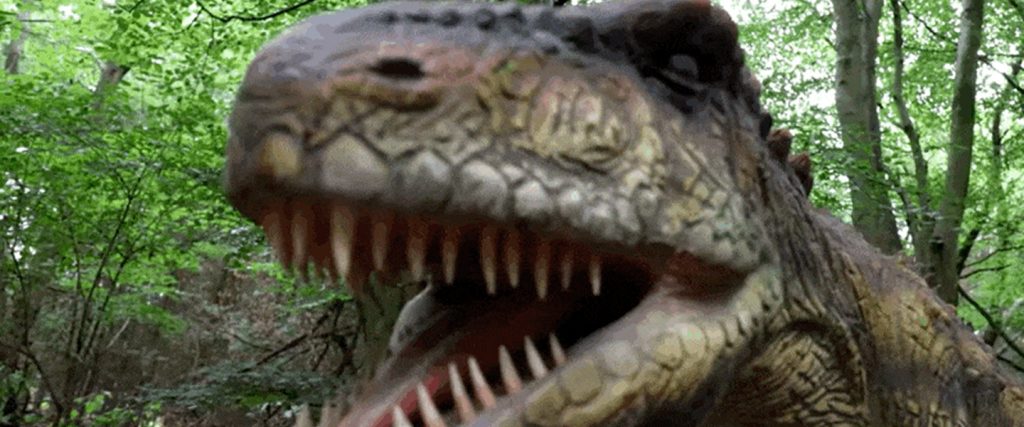
“The most realistic dinosaurs I’ve ever seen.” — Nigel Marven (Prehistoric Park)

Click the cards below to learn more about our animals, exhibits and more!
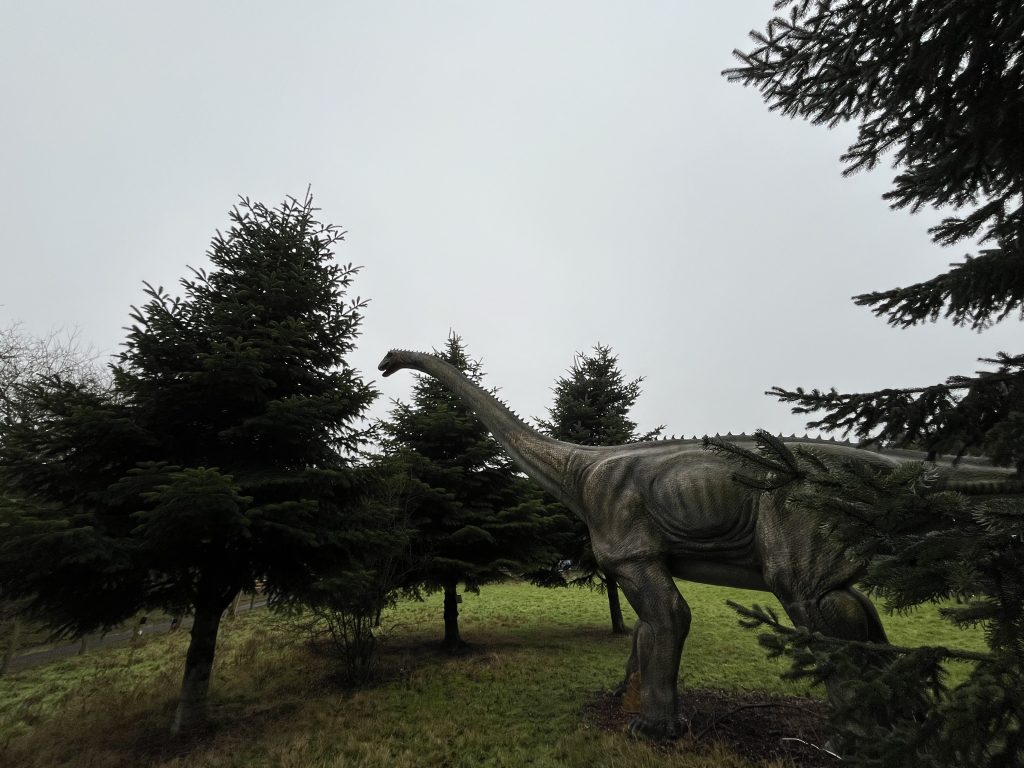

Alamosaurus was a massive, plant-eating dinosaur that lived during the Late Cretaceous period, around 70 million years ago. With its towering height, long neck, and giant body, it was one of the largest sauropods of its time, roaming the ancient landscapes of what is now North America.
As a herbivore, Alamosaurus fed on trees, ferns, and other vegetation, using its long neck to reach high into the treetops or low to the ground for plants. Its massive size likely made it a difficult target for predators, but it was also believed to travel in herds for extra protection. Its long tail may have been used for balance or even as a defensive weapon against smaller predators.
At Hoo Zoo, our Alamosaurus helps visitors discover the world of giant herbivores, the role of sauropods in shaping ancient ecosystems, and how these colossal creatures survived in a world of predators. Observing this towering giant up close gives visitors a glimpse into the prehistoric past and the incredible scale of life millions of years ago.

Allosaurus is a genus of large carnivorous theropod dinosaur that lived 155 to 145 million years ago during the Late Jurassic epoch (Kimmeridgian to late Tithonian). [Credit: Wikipedia]
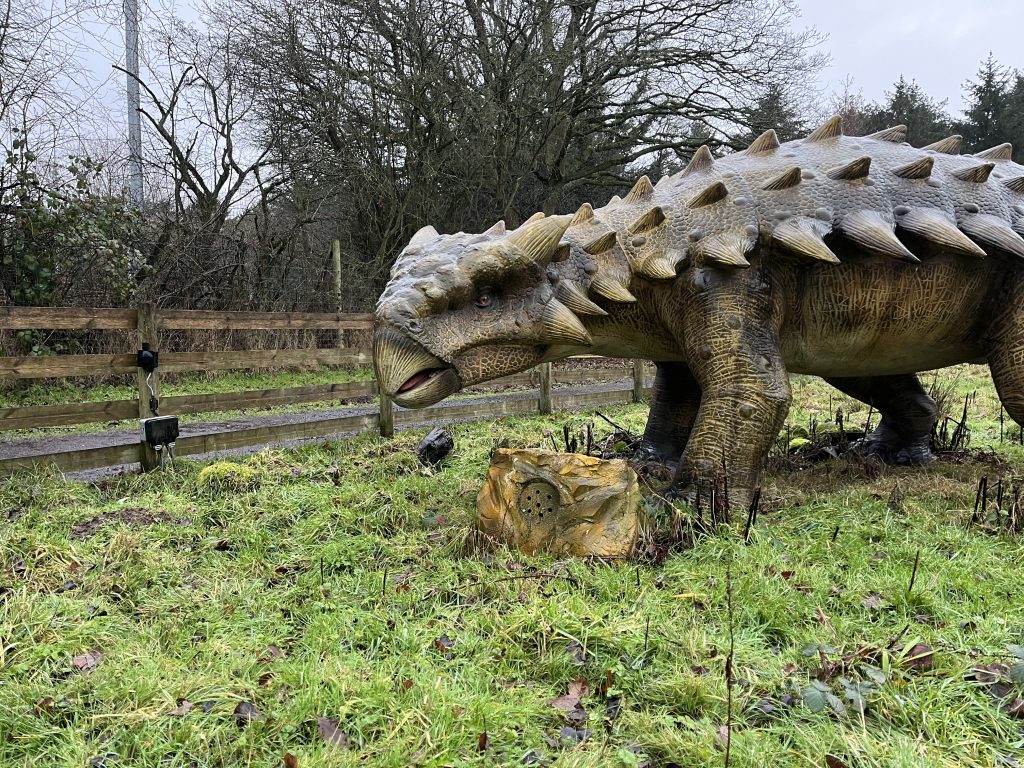
Ankylosaurus was a heavily armoured dinosaur that lived during the Late Cretaceous period, around 66 million years ago. With its thick, bony plates, club-like tail, and low, sturdy body, it was one of the best-defended dinosaurs in history, built to withstand the threats of the Cretaceous landscape.
An herbivore, Ankylosaurus used its powerful jaws to chew on low-lying plants, shrubs, and ferns. Its distinctive body armor, made up of bony plates and spikes, provided excellent protection against predators like Tyrannosaurus rex. The most notable feature of Ankylosaurus was its tail club—a weapon of defense that could deliver powerful blows to attackers.
At Hoo Zoo, our Ankylosaurus helps visitors explore the evolution of defensive adaptations, the role of armoured dinosaurs in prehistoric ecosystems, and how these creatures survived in a world of apex predators. Observing this armoured giant up close gives visitors a chance to appreciate its incredible natural defences and its place in the ancient food chain.
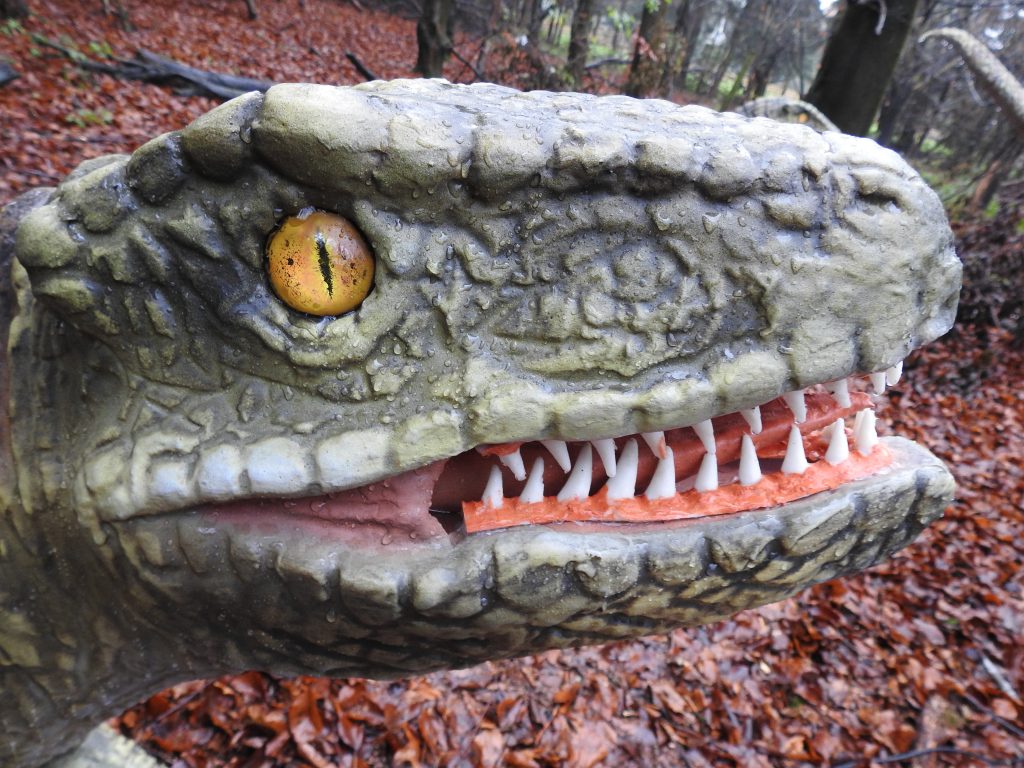
The type (and only) specimen of Atrociraptor, holotype RTMP 95.166.1, was discovered by Wayne Marshall in 1995, in layers of the Horseshoe Canyon Formation also containing an Albertosaurus bonebed, near Drumheller. This bonebed is located at the top of Unit 4 of the Horseshoe Canyon Formation, which dates to about 68.5 million years ago. The only known specimen consists of parts of the upper and lower jaws—both premaxillae, a right maxilla, both dentaries—teeth and numerous small fragments. The skull appears to have been unusually short and tall. The teeth are relatively straight, but they emerge from the tooth sockets at an angle to the jaw line, resulting in a strongly raked row of teeth. A number of isolated teeth (previously referred to Saurornitholestes) have also been recovered from the Horseshoe Canyon Formation; they can be recognized by their unusually large serrations. [CREDIT: WIKIPEDIA]
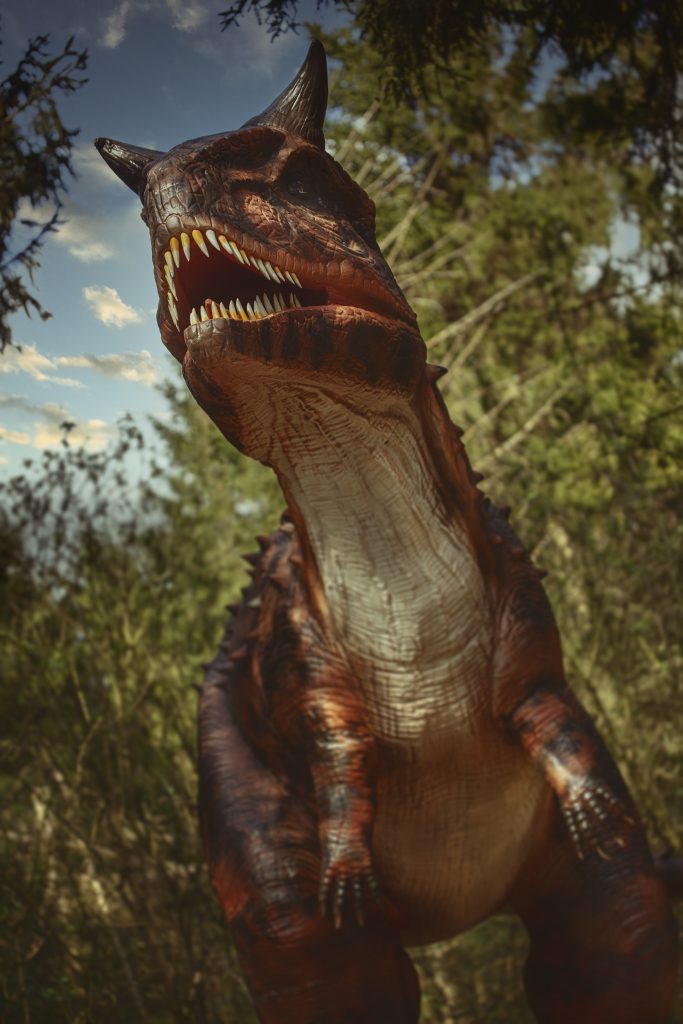
Carnotaurus is a genus of theropod dinosaur that lived in South America during the Late Cretaceous period, probably sometime between 71 and 69 million years ago. The only species is Carnotaurus sastrei. Known from a single well-preserved skeleton, it is one of the best-understood theropods from the Southern Hemisphere. The skeleton, found in 1984, was uncovered in the Chubut Province of Argentina from rocks of the La Colonia Formation. Carnotaurus is a derived member of the Abelisauridae, a group of large theropods that occupied the large predatorial niche in the southern landmasses of Gondwana during the late Cretaceous. Within the Abelisauridae, the genus is often considered a member of the Brachyrostra, a clade of short-snouted forms restricted to South America. [CREDIT: WIKIPEDIA]
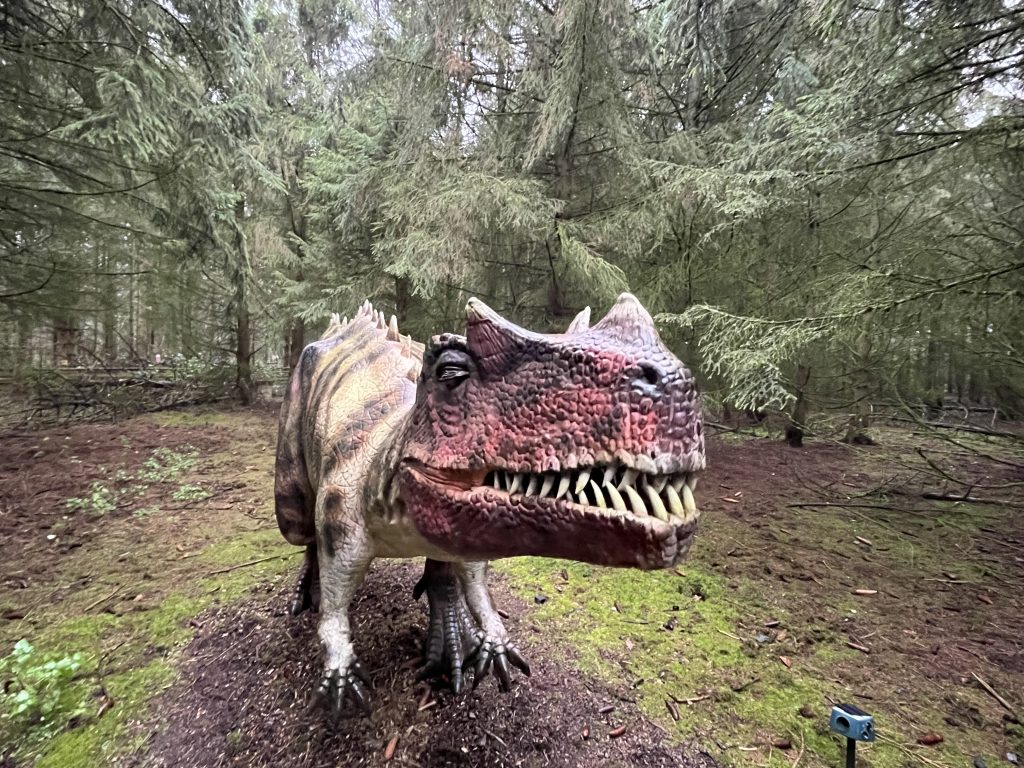
Ceratosaurus was a fierce carnivorous dinosaur that roamed the Late Jurassic period, around 150 million years ago. With its distinctive horn on the nose, sharp teeth, and muscular build, it was a formidable predator in the ecosystems of its time.
Feeding on smaller dinosaurs and large reptiles, Ceratosaurus had a robust, agile body built for hunting. Its large teeth and strong jaws made it an efficient hunter, while its horn might have been used for defense, display, or to fight off rivals. Known for its agile, long legs, Ceratosaurus could move quickly through its environment, making it a swift and powerful predator.
At Hoo Zoo, our Ceratosaurus helps visitors learn about the evolutionary traits of predatory dinosaurs, the dynamics of hunting in the Jurassic period, and the role of unique physical adaptations in survival. Observing this fierce predator up close offers a chance to appreciate its strength, agility, and important role in its prehistoric food chain.
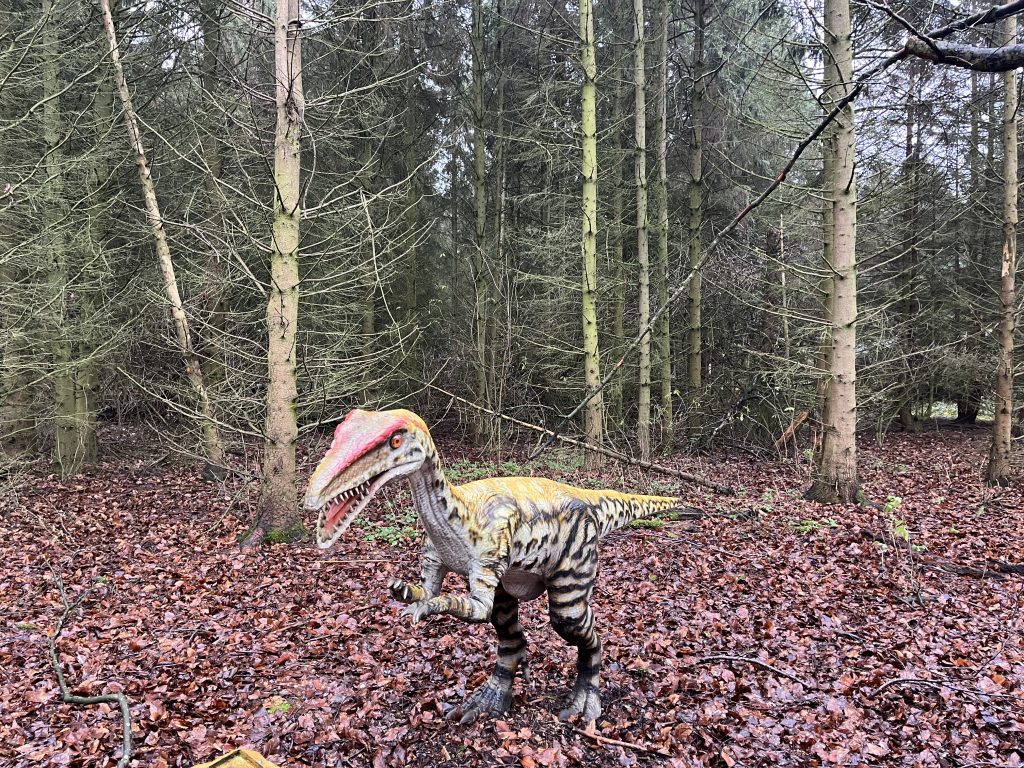
Coelophysis was one of the earliest known dinosaurs, living over 200 million years ago during the Late Triassic period. This small, agile theropod is famous for its slender body, long legs, and sharp teeth, making it a fast and efficient predator in its ancient world.
Coelophysis was a carnivore, hunting in packs to bring down prey like small vertebrates and early reptiles. Its long, lightweight frame and sharp claws helped it quickly chase down prey, while its keen eyesight and sharp senses made it an expert hunter of the Triassic landscape.
At Hoo Zoo, our Coelophysis gives visitors a glimpse into the dawn of the dinosaur era, showcasing the early evolution of predatory dinosaurs and the ways they shaped their ecosystems. Observing this speedy, agile dinosaur up close offers a chance to understand the origins of predation in the dinosaur world and how these early hunters set the stage for the rise of larger species in the Jurassic period.
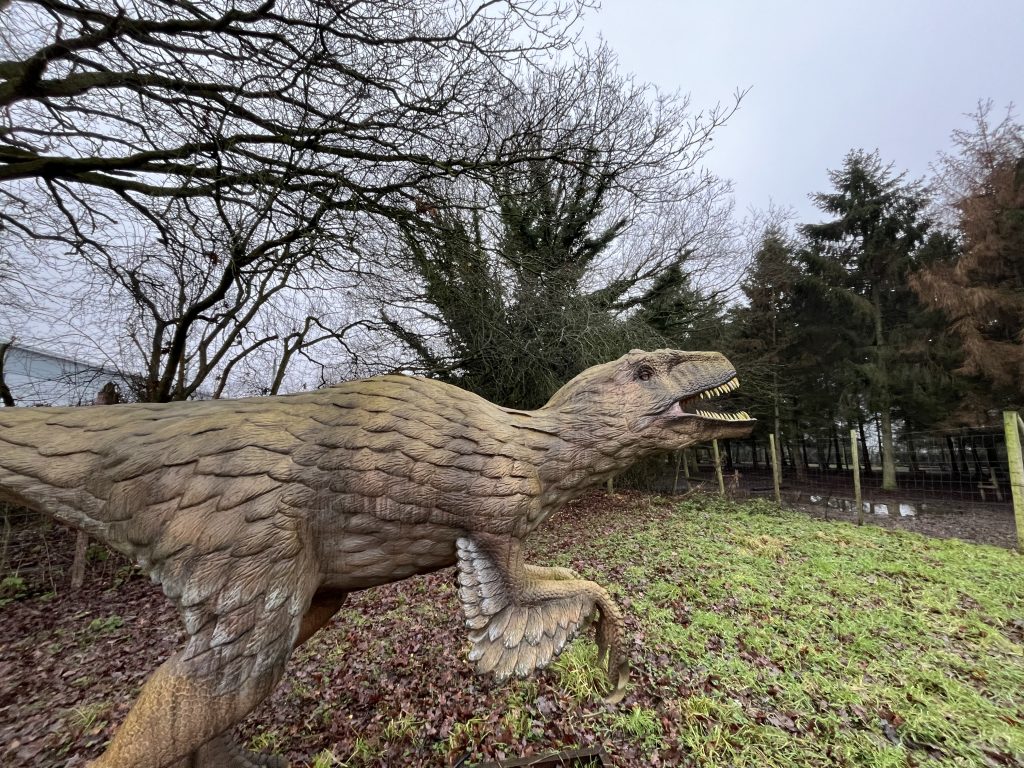
Dakotaraptor was a swift and formidable predator that lived during the Late Cretaceous period, around 66 million years ago. With its long, powerful legs, sharp claws, and large, sickle-shaped toe, it was a highly specialized hunter, built for speed and agility.
Dakotaraptor likely hunted in packs, using coordinated strategies to take down prey much larger than itself. Its long, feathered body and sharp talons made it an expert in ambush tactics, while its keen eyesight and sharp senses helped it track prey with precision. This dromaeosaur was a close relative of Velociraptor, but much larger, making it an even more dangerous predator.
At Hoo Zoo, our Dakotaraptor offers visitors a chance to learn about the evolution of predatory dinosaurs, the role of pack hunting in Cretaceous ecosystems, and the unique adaptations that made raptors such efficient hunters. Observing this agile and intelligent predator up close provides a glimpse into the fast-paced world of one of the fiercest dinosaurs of its time.
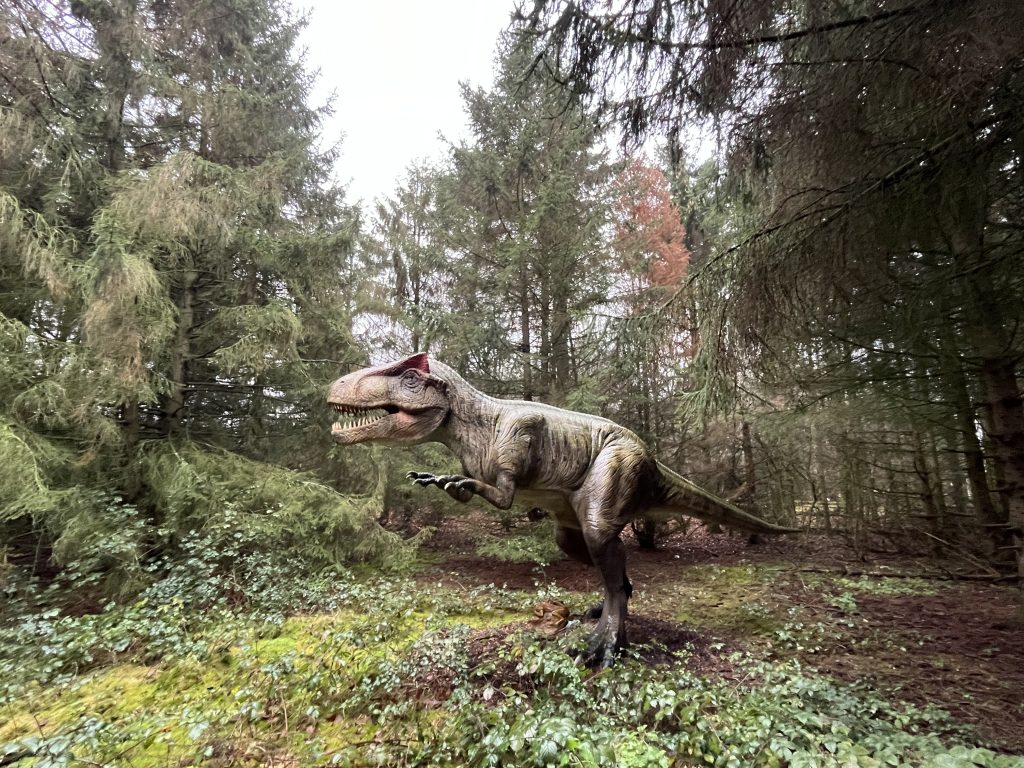
Dilophosaurus was one of the earliest large carnivorous dinosaurs, living during the Early Jurassic period, about 193 million years ago. With its distinctive double crests on its head and slender, powerful body, it was a striking predator, built for speed and agility.
Dilophosaurus hunted other dinosaurs and smaller prey, using its sharp teeth and powerful jaws to catch and tear into its food. Its long legs and lightweight body allowed it to move quickly, while the crests on its head might have been used for communication or attracting mates, adding a unique flair to its appearance.
At Hoo Zoo, our Dilophosaurus helps visitors step into the world of early Jurassic predators, learning about the evolution of carnivorous dinosaurs and their role in prehistoric ecosystems. Observing this swift, unique predator up close gives visitors a chance to understand how these early dinosaurs hunted and interacted with their environment.
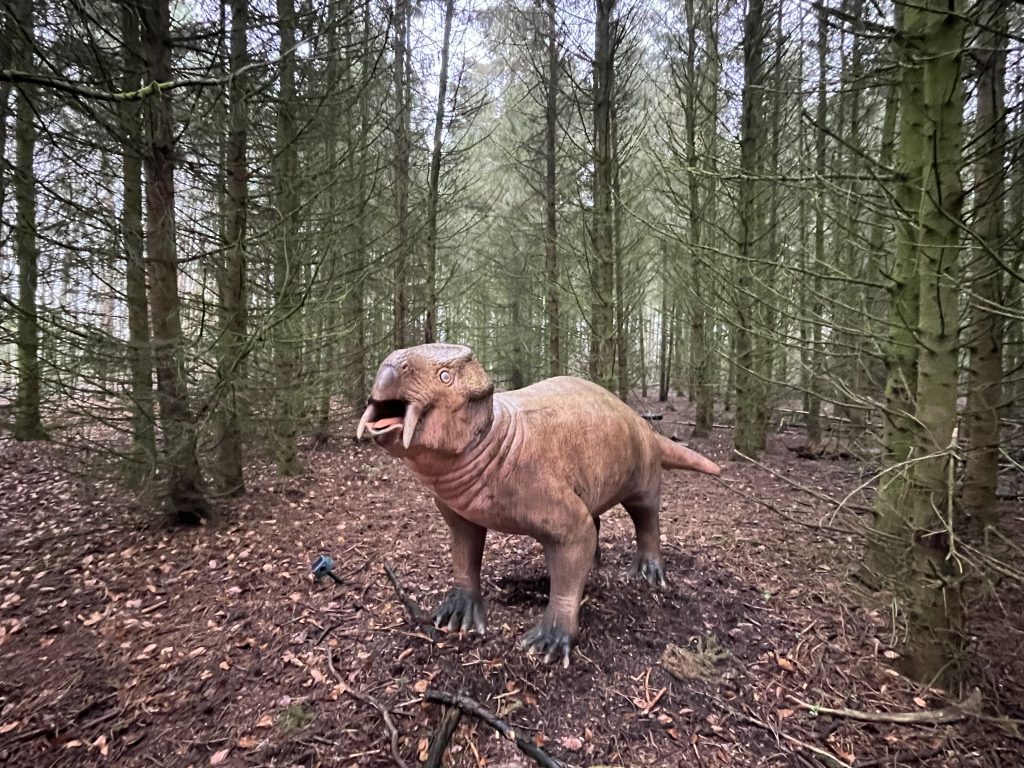
Placerias was a large, herbivorous reptile that lived during the Late Triassic period, around 210 million years ago. With its stocky body, powerful legs, and wide, flat face, it was well-suited for life in the dry, arid landscapes of early Earth.
As an herbivore, Placerias fed on tough, low-lying plants, using its strong jaws and teeth to munch through vegetation. Its thick, robust body and short tail helped it move through dense plant life, while its sturdy legs supported its large frame as it slowly grazed across the land.
At Hoo Zoo, our Placerias helps visitors explore the diversity of early reptilian life, the evolution of herbivorous creatures, and how they shaped the ecosystems of the Triassic period. Observing this massive, plant-eating creature up close offers a chance to appreciate the early evolution of large herbivores and their important role in the balance of prehistoric environments.
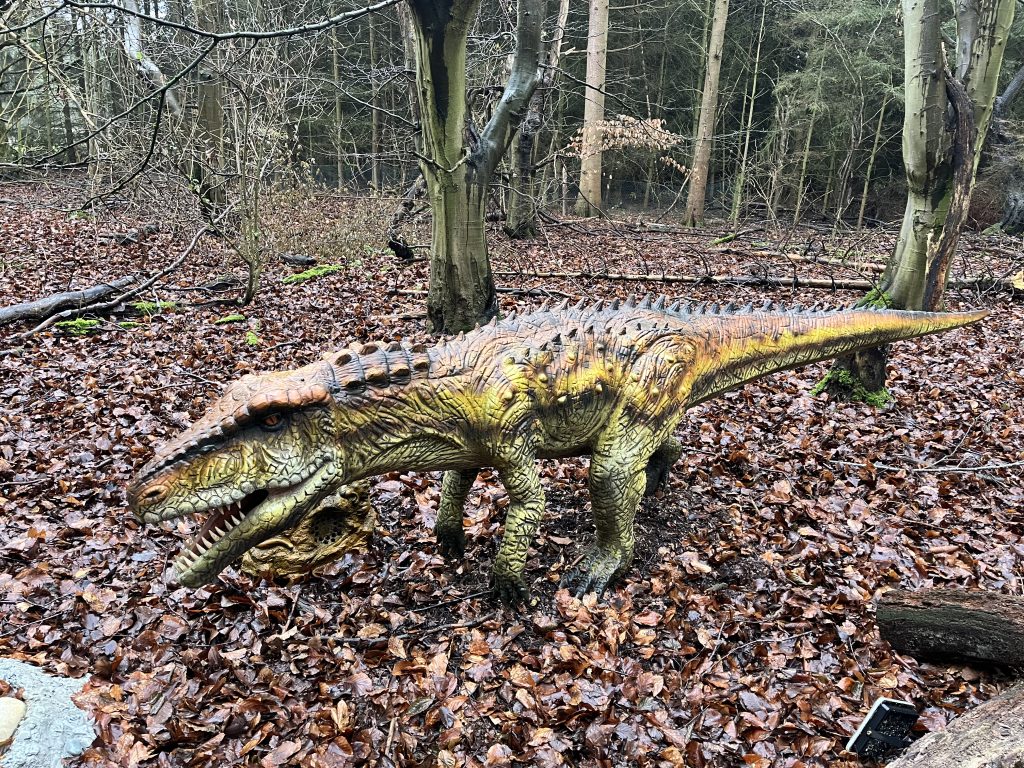
Postosuchus was a fearsome, predatory reptile that lived during the late Triassic period, around 220 million years ago, long before the rise of dinosaurs. With its powerful jaws, muscular build, and upright stance, it was one of the dominant predators of its time, hunting the early ancestors of mammals and other smaller reptiles.
As a carnivore, Postosuchus used its sharp teeth and strong limbs to capture and overpower its prey. Its robust body and sharp claws made it a skilled hunter, while its long tail helped it maintain balance as it sprinted across the ancient landscapes.
At Hoo Zoo, our Postosuchus helps visitors step back in time to the Triassic period, learning about the early days of reptilian evolution and the rise of the first apex predators. Observing this ancient creature up close gives visitors a glimpse into the fierce world of prehistoric predators and how they shaped the ecosystems of their era.
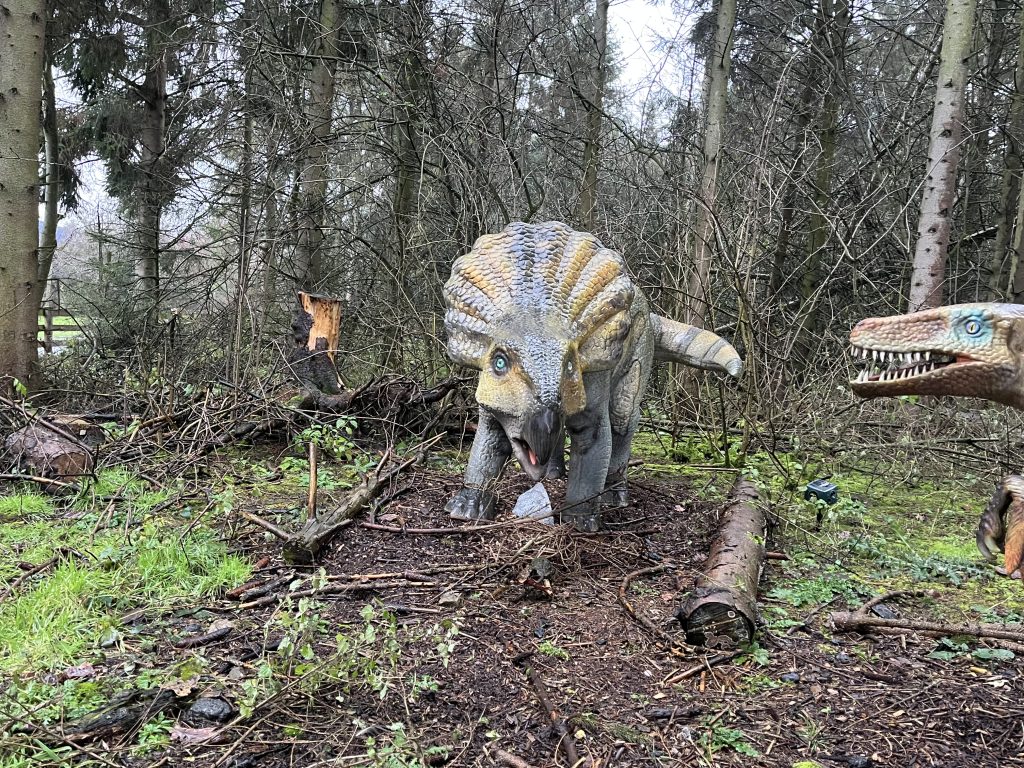
Protoceratops was a small, herbivorous dinosaur that lived during the Late Cretaceous period, around 75 million years ago. With its short frill, beaked face, and stocky body, it was an early relative of the more famous ceratopsids like Triceratops, known for its unique features and herbivorous diet.
Feeding on plants, Protoceratops was a calm and grazing dinosaur that likely used its beak to clip vegetation from shrubs and low trees. While it wasn’t a predator, its sturdy body and frilled head may have offered protection against potential threats. It was one of the first ceratopsians to evolve a frill, which might have been used in communication or mating displays.
At Hoo Zoo, our Protoceratops helps visitors discover the origins of horned dinosaurs, the evolution of herbivores, and how these early species adapted to their environments. Observing this gentle, plant-eating dinosaur up close provides a chance to understand the evolutionary steps that led to some of the largest, most recognizable dinosaurs of the Cretaceous period.
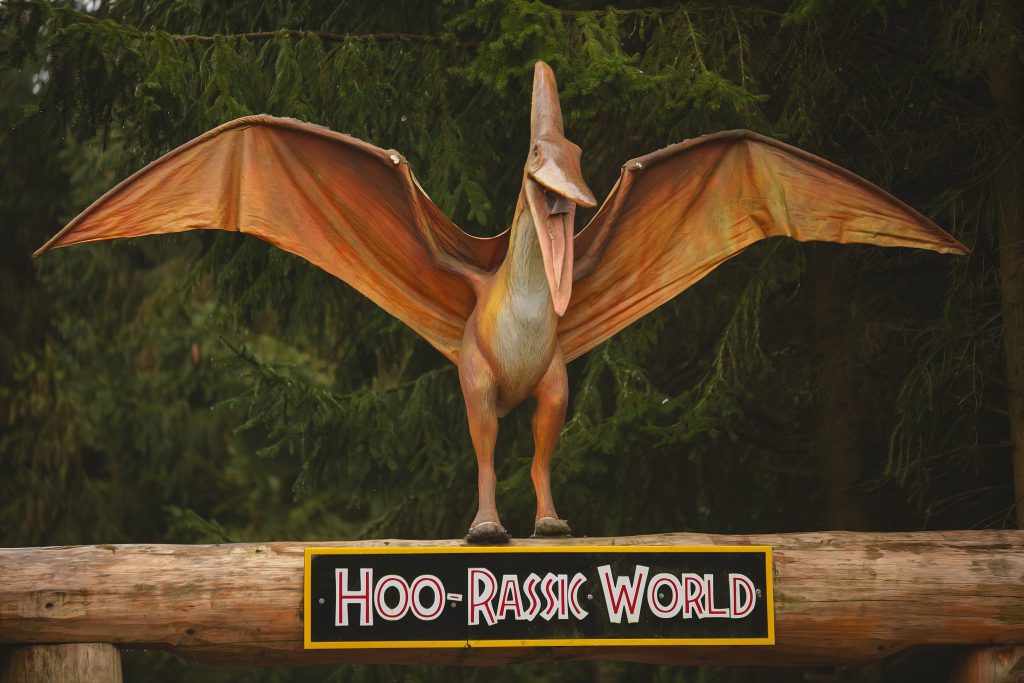
Pteranodon is a genus of pterosaur that included some of the largest known flying reptiles, with P. longiceps having a wingspan of 6.5 m (21 ft). They lived during the late Cretaceous geological period of North America in present-day Kansas, Nebraska, Wyoming, South Dakota and Alabama. More fossil specimens of Pteranodon have been found than any other pterosaur, with about 1,200 specimens known to science, many of them well preserved with nearly complete skulls and articulated skeletons. It was an important part of the animal community in the Western Interior Seaway.[CREDIT:WIKIPEDIA]
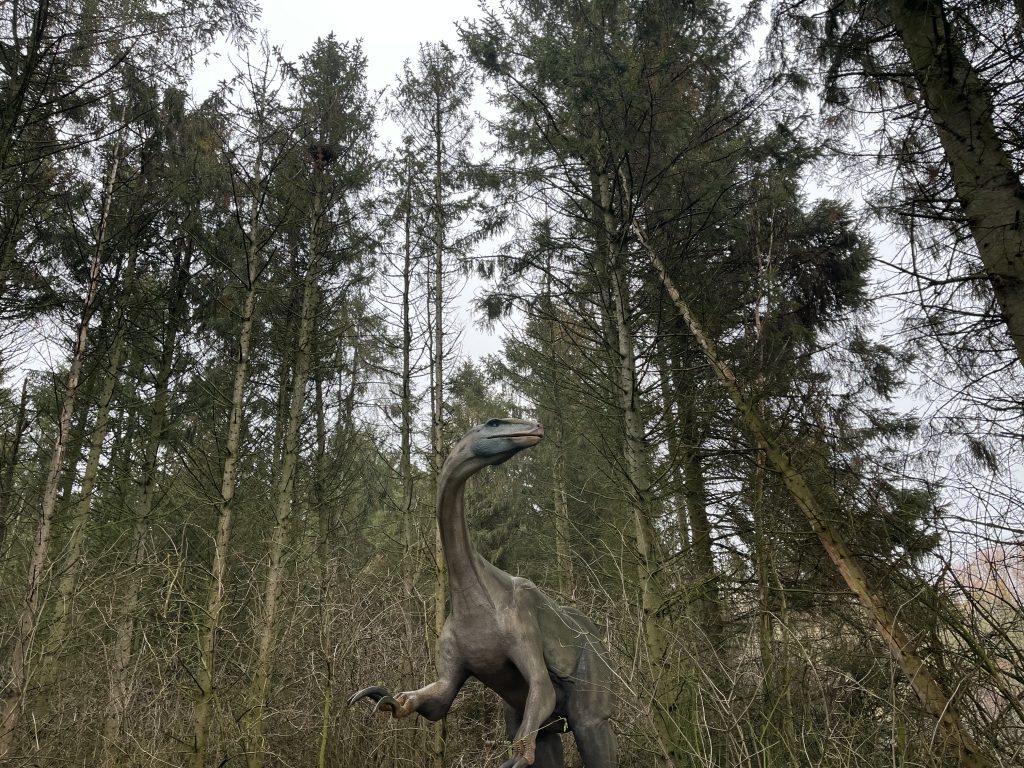
Therizinosaurus was one of the most bizarre and fascinating dinosaurs of the Late Cretaceous period, living around 70 million years ago. With its enormous claws—some of the longest of any dinosaur—long neck, and feathered body, it looked like no other dinosaur, blending features of both herbivores and carnivores.
Despite its intimidating claws, Therizinosaurus was a herbivore, feeding on plants and vegetation. Its sharp claws, which could grow over 3 feet long, were likely used to pull down branches or strip leaves from tall trees. Its long neck and specialized teeth allowed it to reach high vegetation, while its robust build made it an imposing figure in its ecosystem.
At Hoo Zoo, our Therizinosaurus offers visitors a chance to explore the incredible diversity of dinosaur adaptations, the evolution of herbivorous giants, and the mysteries behind this unusual creature's appearance and behavior. Observing this towering, unique dinosaur up close helps visitors appreciate how strange and specialized the ancient world truly was.
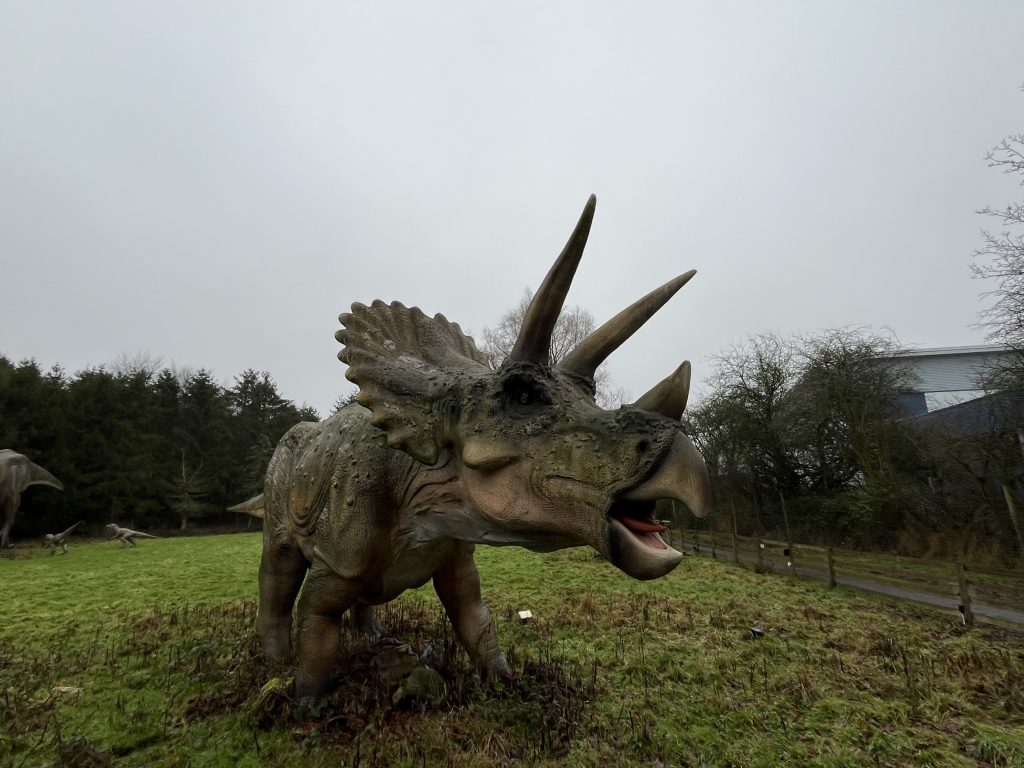
Triceratops was one of the most iconic herbivorous dinosaurs of the Late Cretaceous period, living around 66 million years ago. With its large frill, three distinct horns, and robust body, it was a powerful herbivore that roamed the ancient landscapes of North America.
Feeding primarily on plants like ferns and cycads, Triceratops used its strong beak to clip vegetation, while its massive frill and horns likely served as defense against predators like Tyrannosaurus rex. The horns, which included two large ones above the eyes and a smaller one on the nose, were probably used for combat with rivals or during mating displays, helping to establish dominance within herds.
At Hoo Zoo, our Triceratops helps visitors explore the unique features of horned dinosaurs, the role of plant-eaters in shaping prehistoric ecosystems, and how these powerful creatures survived in a world full of apex predators. Observing this incredible, well-defended dinosaur up close gives visitors a chance to appreciate the strength, beauty, and social nature of one of the most recognisable dinosaurs.
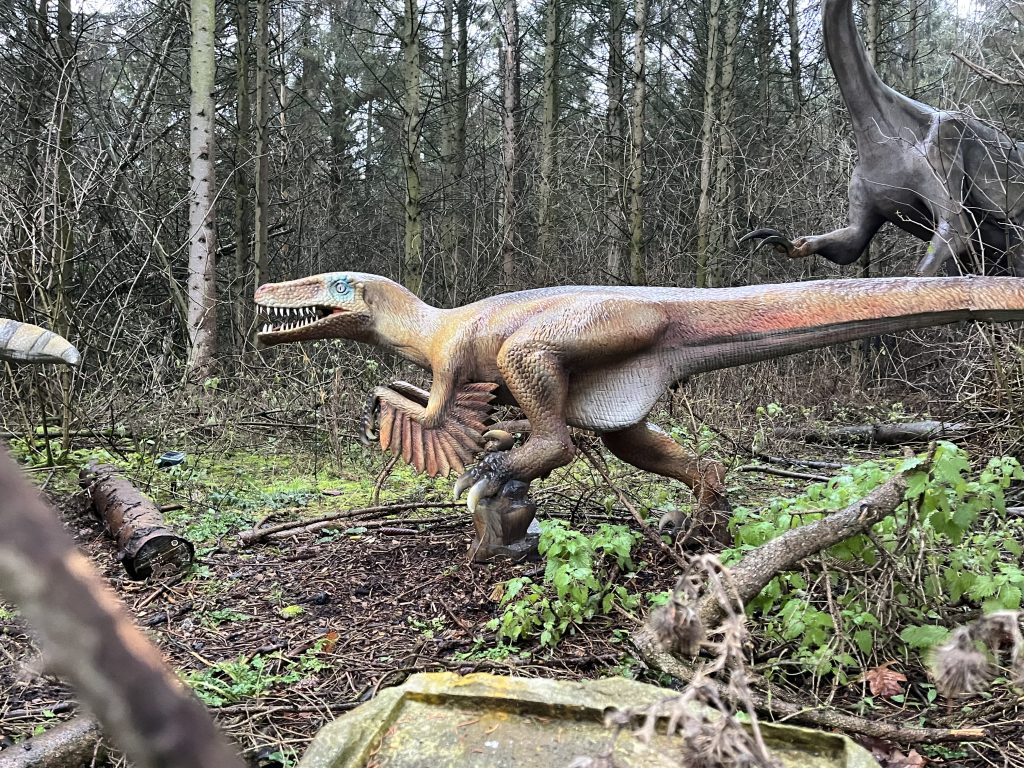
Velociraptor was a small but deadly predator that lived during the Late Cretaceous period, about 75 million years ago. With its sleek body, sharp claws, and keen intelligence, it was a highly effective hunter, known for its agility and speed.
Velociraptors hunted in packs, using teamwork and strategy to bring down prey much larger than themselves. Their sharp, curved claws were perfect for grasping and slashing, while their sharp teeth and excellent vision made them skilled predators. Despite their size, they were quick, nimble, and highly intelligent—traits that made them one of the most effective hunters of their time.
At Hoo Zoo, our Velociraptor offers visitors a chance to learn about the evolution of predatory dinosaurs, the role of pack hunting in ancient ecosystems, and the unique adaptations that allowed these swift hunters to dominate their environment. Observing this clever, agile predator up close gives visitors a glimpse into the fast-paced, strategic world of one of the most famous dinosaurs.
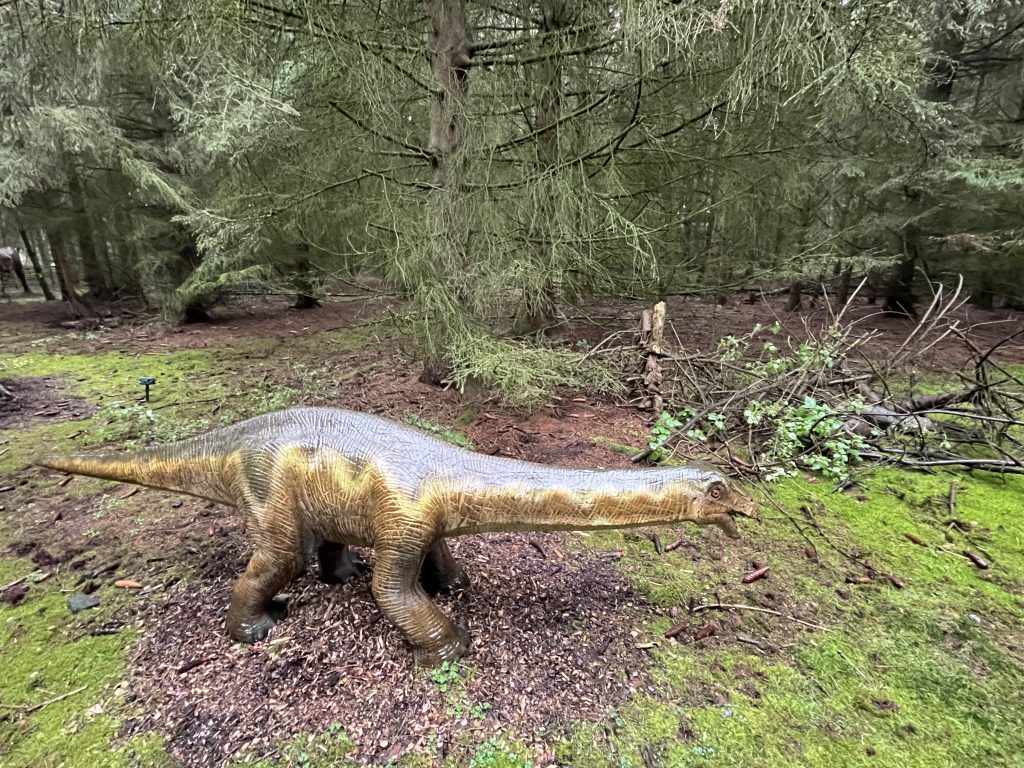
Diplodocus was one of the largest and most impressive sauropods of the Late Jurassic period, living around 150 million years ago. With its long neck, whip-like tail, and enormous size, it was a gentle giant that roamed the lush floodplains in search of food.
As a herbivore, Diplodocus fed on conifers, ferns, and other plant life, using its long neck to reach high branches or strip leaves from low-lying plants. Its long tail, which could be used for balance, may have also acted as a defensive weapon or for communication within herds.
At Hoo Zoo, our Diplodocus offers visitors a chance to explore the lives of giant herbivores, the role of sauropods in shaping prehistoric ecosystems, and the adaptations that allowed these massive creatures to thrive. Observing this colossal creature up close gives visitors a glimpse into the world of the largest land animals to ever walk the Earth.
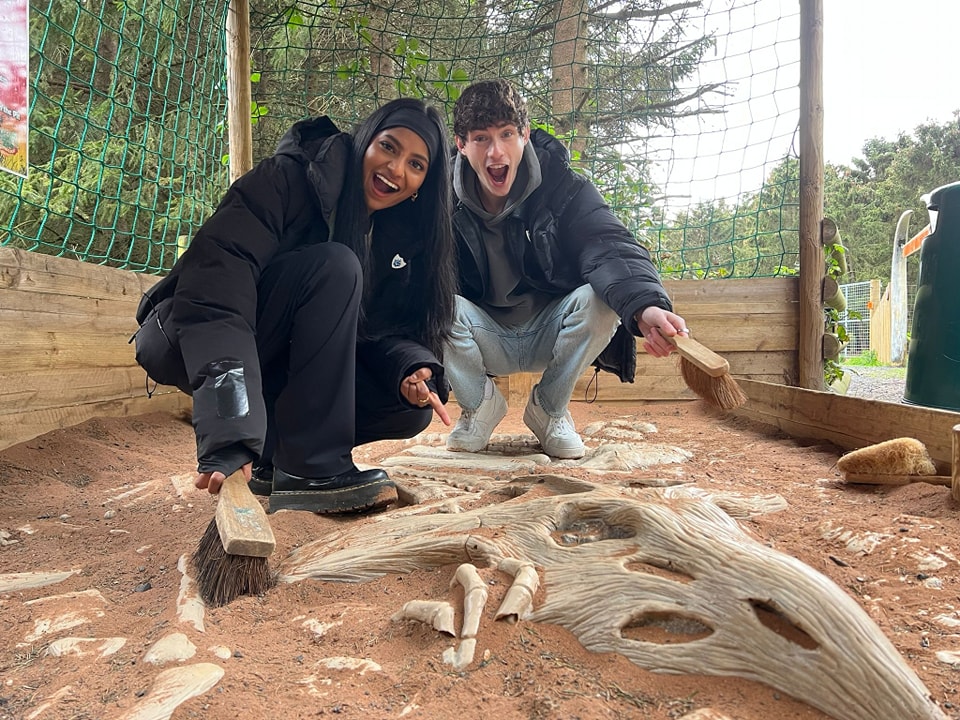
During an American Museum of Natural History expedition to the Flaming Cliffs (Bayn Dzak or Bayanzag) of the Djadochta Formation, Gobi Desert, on 11 August 1923, Peter Kaisen discovered the first Velociraptor fossil known to science—a crushed but complete skull, associated with one manual claw and adjoining phalanges (AMNH 6515).
Our fossils are based on these but you can actually dig them yourselves!
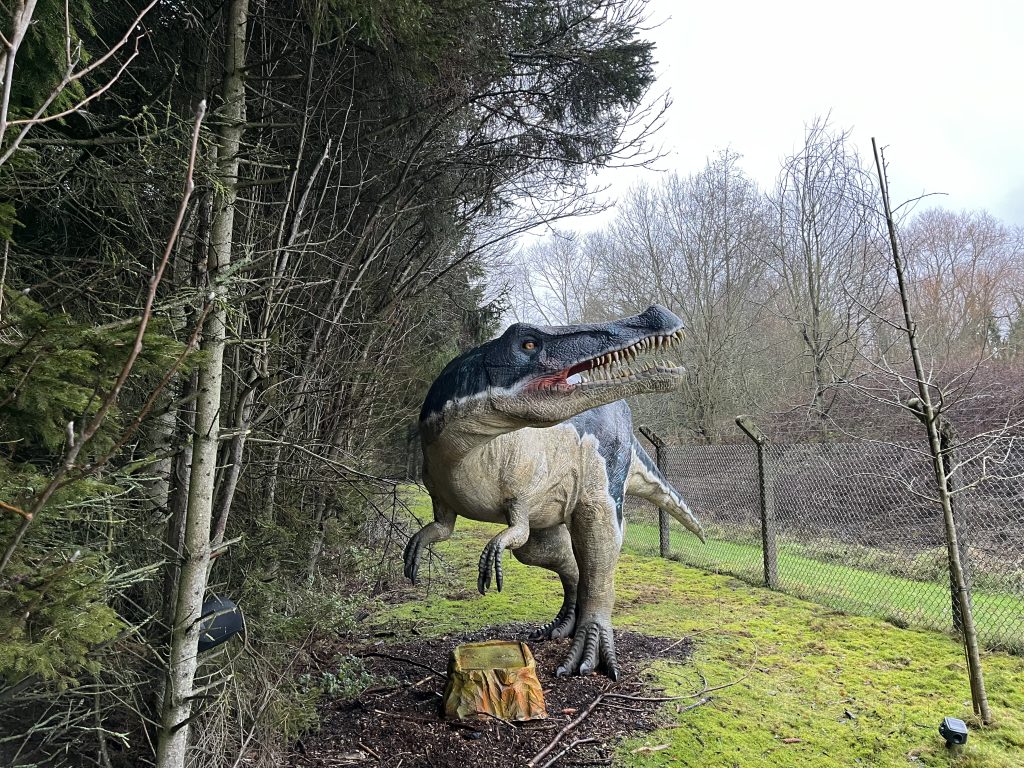
Baryonyx was a large, predatory dinosaur that lived during the Early Cretaceous period, around 130 million years ago. With its long, crocodile-like snout, sharp claws, and powerful build, it was a formidable predator, uniquely adapted to hunt both land and aquatic prey.
Baryonyx’s diet was diverse, feeding on fish, smaller dinosaurs, and possibly other reptiles. Its large, curved claws and sharp teeth made it a proficient hunter of fish, which it likely snatched from rivers and lakes with precision. Its long, muscular tail and powerful legs helped it move swiftly on land, while its streamlined body allowed it to navigate through water with ease.
At Hoo Zoo, our Baryonyx helps visitors explore the fascinating world of Cretaceous-era predators, the evolution of dinosaur hunting strategies, and the unique adaptations that allowed certain species to thrive in both aquatic and terrestrial environments. Observing this powerful, versatile predator up close offers a chance to appreciate its hunting techniques and vital role in the prehistoric food chain.
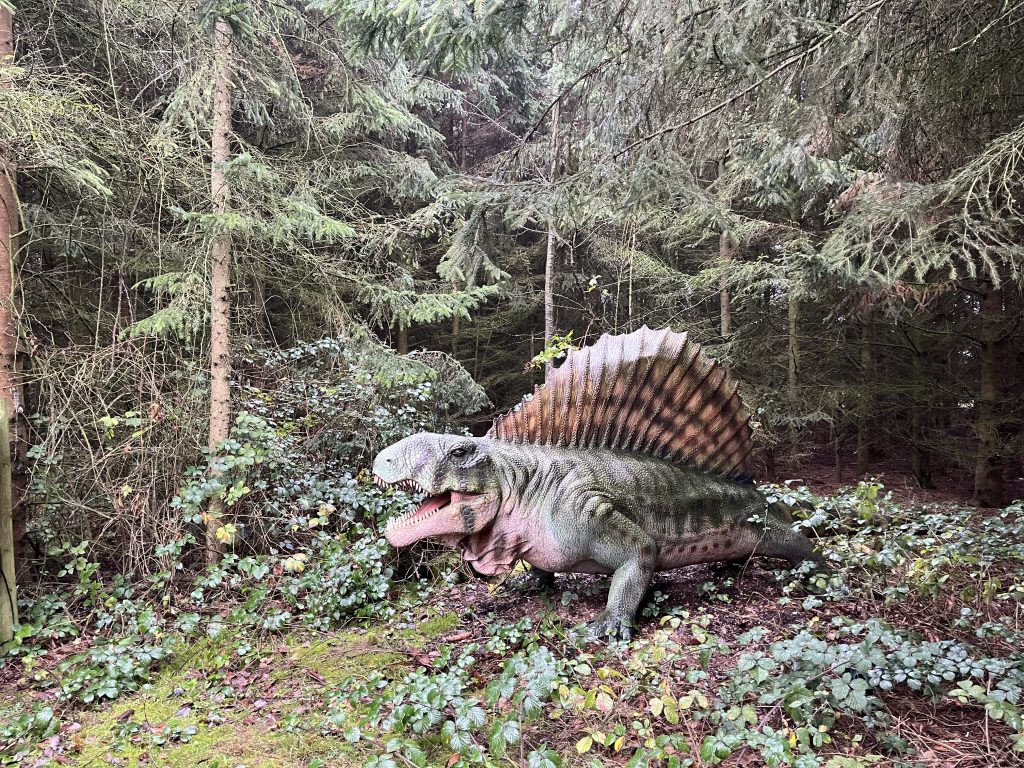
Dimetrodon is a fascinating, prehistoric reptile that roamed the Earth during the early Permian period, long before dinosaurs. With its striking sail-like structure on its back, sharp teeth, and powerful body, it was a top predator of its time, perfectly adapted to life in warm, swampy environments.
Dimetrodon was carnivorous, hunting smaller reptiles and amphibians using its sharp, serrated teeth to tear through prey. The sail, which is made up of elongated spines connected by skin, is believed to have helped regulate its body temperature, making it an efficient hunter in its sun-drenched world.
At Hoo Zoo, our Dimetrodon helps visitors dive into the ancient world of early reptiles, the evolution of prehistoric creatures, and the fascinating link between early reptiles and the later emergence of dinosaurs. Observing this incredible creature up close allows visitors to imagine life on Earth millions of years ago and appreciate the role these early predators played in shaping ecosystems.
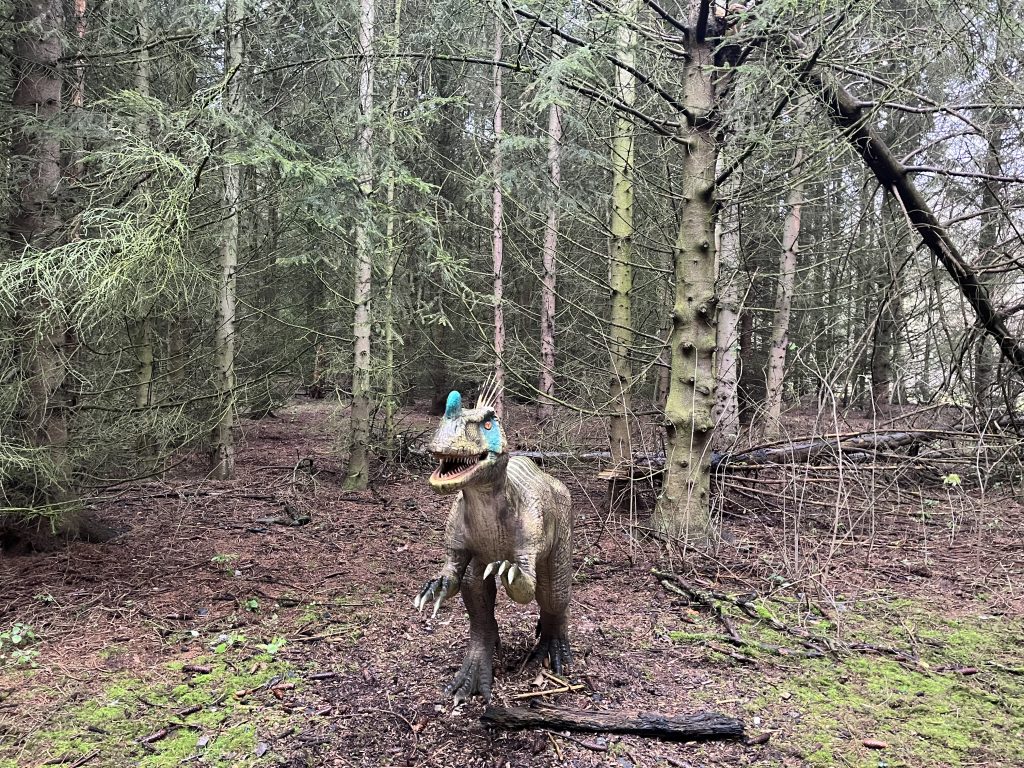
Ornitholestes was a small, fast-running dinosaur that lived during the Late Jurassic period, around 160 million years ago. With its slender body, long legs, and sharp teeth, it was built for speed and agility, making it a skilled hunter of small prey.
Feeding on insects, small vertebrates, and perhaps even young dinosaurs, Ornitholestes relied on its keen senses and quick reflexes to catch its meals. Its lightweight frame and long tail helped it balance as it sprinted through the dense foliage of the Jurassic forests, making it one of the nimblest predators of its time.
At Hoo Zoo, our Ornitholestes helps visitors discover the fast-paced world of small predators, the evolution of lightweight, agile dinosaurs, and the role of nimble hunters in prehistoric ecosystems. Observing this swift, sharp-toothed predator up close offers a chance to appreciate its speed, agility, and the ecological balance it helped maintain.
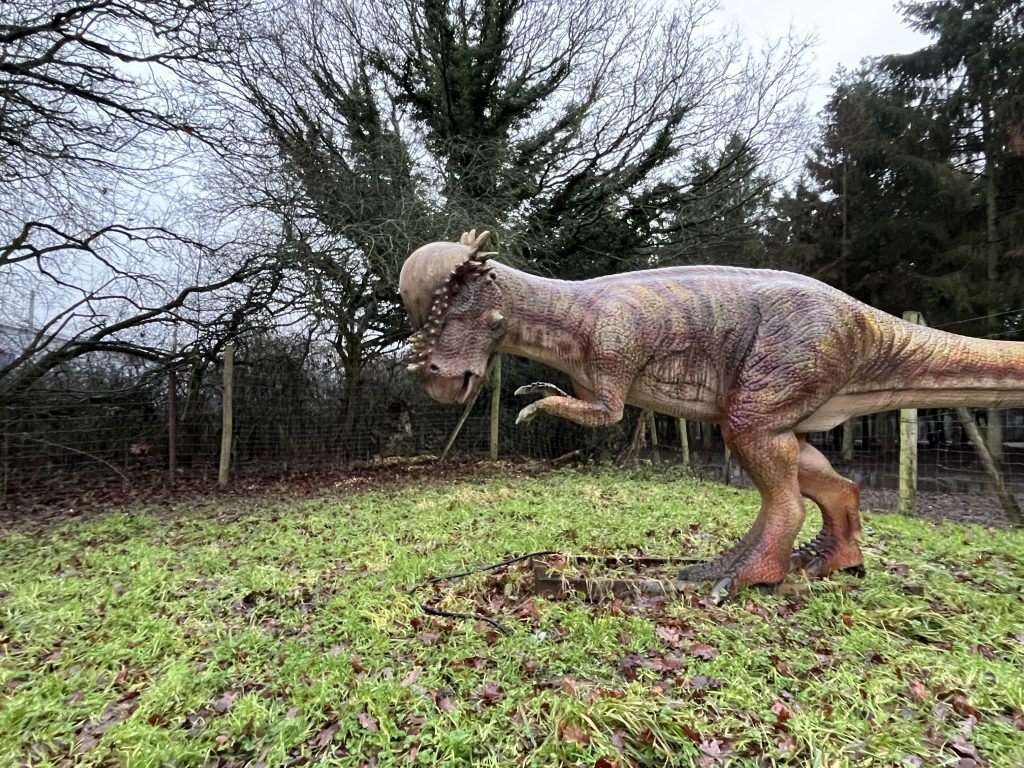
Pachycephalosaurus was a unique, herbivorous dinosaur that lived during the Late Cretaceous period, around 66 million years ago. Known for its thick, dome-shaped skull, it was one of the most distinctive dinosaurs of its time, with a head that could withstand powerful impacts.
Pachycephalosaurus likely used its sturdy skull for head-butting, a behavior thought to be used in combat with rivals for territory or mates. Its small, bipedal body was well adapted for running, while its herbivorous diet consisted of low-lying plants, ferns, and shrubs. The thick skull may have also provided protection against predators in its environment.
At Hoo Zoo, our Pachycephalosaurus helps visitors discover the evolution of unusual dinosaur traits, the role of head-butting behaviour in the dinosaur world, and how this fascinating creature survived in the Cretaceous ecosystem. Observing this unique, tough dinosaur up close offers a chance to appreciate the strength and strategy behind its remarkable headgear.
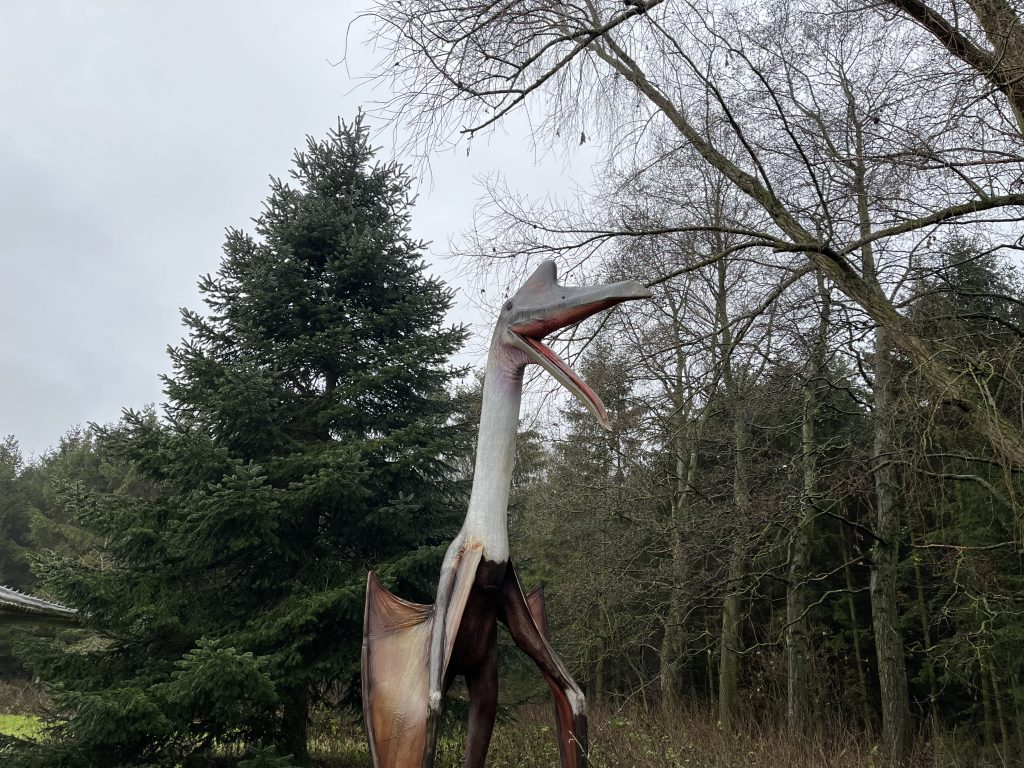
Quetzalcoatlus was one of the largest flying creatures to ever live, soaring through the skies during the Late Cretaceous period, about 70 million years ago. With a wingspan that could stretch up to 33 feet, it was a true giant among pterosaurs, making it one of the most impressive flyers of its time.
As a carnivore, Quetzalcoatlus likely hunted small dinosaurs, fish, and other vertebrates, using its long, toothless beak to snatch up prey from the ground or water. Despite its enormous wings, it may have spent much of its time on the ground, using its long legs to stalk and hunt before taking off for flight.
At Hoo Zoo, our Quetzalcoatlus helps visitors explore the fascinating world of prehistoric flight, the evolution of giant flying reptiles, and the role of these incredible creatures in the ancient ecosystems. Observing this massive pterosaur up close offers a chance to imagine the awe-inspiring flight of one of Earth's greatest airborne predators.
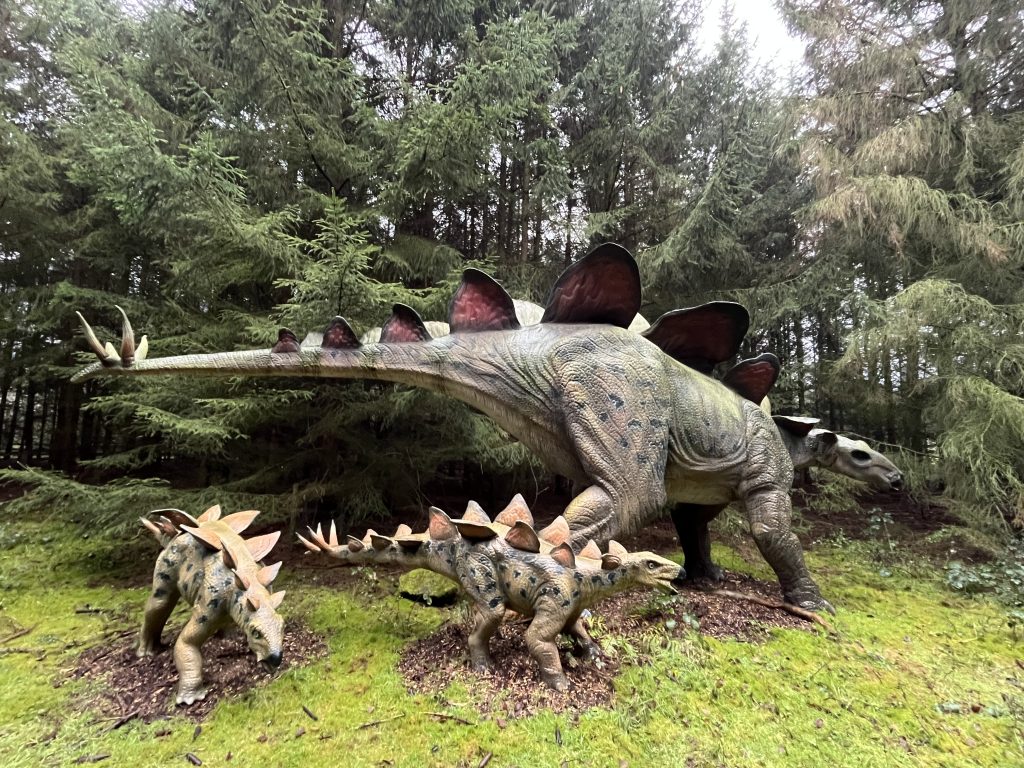
Stegosaurus was one of the most distinctive dinosaurs of the Late Jurassic period, living around 150 million years ago. With its large, plated back, spiked tail, and sturdy body, it was a slow-moving herbivore that relied on its size and unique defenses for protection.
Feeding on low-lying plants like ferns and cycads, Stegosaurus had a small brain compared to its massive body, yet it was well-protected by its spiked tail—known as a "thagomizer"—which it used to defend itself from predators like Allosaurus. The plates along its back, once thought to be armor, might have also helped regulate body temperature or been used for mating displays.
At Hoo Zoo, our Stegosaurus helps visitors explore the fascinating world of herbivorous dinosaurs, the evolution of defensive adaptations, and how these ancient creatures survived in a world full of predators. Observing this iconic dinosaur up close gives visitors a chance to appreciate its unique features and vital role in shaping the prehistoric landscape.
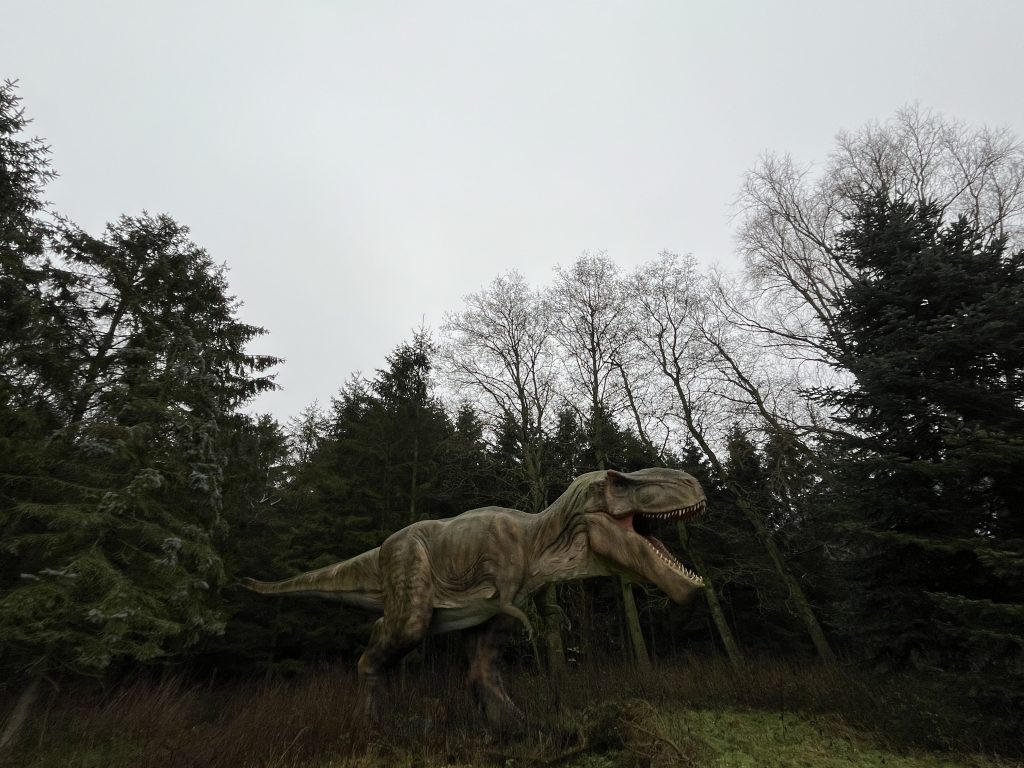
Tyrannosaurus Rex, often simply known as T. rex, was one of the largest and most fearsome predators to ever walk the Earth, dominating the Late Cretaceous period around 66 million years ago. With its massive head, powerful jaws, and bone-crushing teeth, it was built for one thing: hunting.
T. rex was an apex predator, preying on large herbivores like Triceratops and Edmontosaurus. Its keen senses, including incredible vision and a strong sense of smell, helped it track down prey from great distances. Despite its tiny arms, its muscular legs and long tail gave it speed and balance, allowing it to charge with tremendous power and agility for such a massive creature.
At Hoo Zoo, our T. rex offers visitors a glimpse into the world of Cretaceous predators, the role of apex hunters in shaping ecosystems, and the adaptations that made T. rex such a terrifying force. Observing this mighty predator up close gives visitors a chance to appreciate the power, strategy, and sheer scale of one of the most iconic dinosaurs of all time.
Wander through our atmospheric woodland trail and come face-to-face with dozens of life-like, moving dinosaurs and prehistoric creatures. Discover how these incredible animals lived, hunted and evolved in one of the UK’s largest and most immersive dinosaur attractions.
Join our mailing list ot be the first to know about upcoming events!
To guarantee entry on the day, it’s essential that tickets are pre-booked. This can be done online through our ticketing system.

 Book Your Tickets


