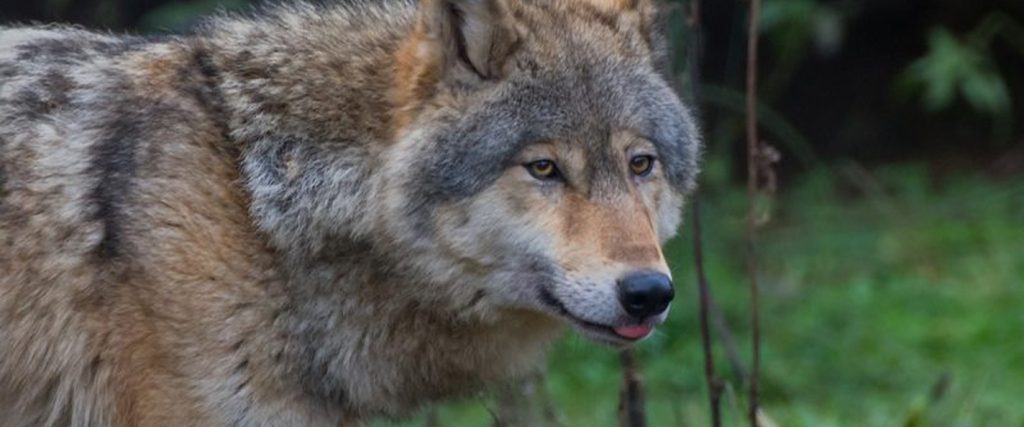
Wander down into our Wolf Woods to see our wolves alongside deer and cockatoos, explore our walk-through wallaby enclosure, and keep an eye out for our wild badger sett, whose residents occasionally make a surprise appearance.

Find out more about the animals who live in this land!


Arctic Wolves are powerful predators native to the frozen tundras of the Arctic. With their thick white fur, keen eyes, and muscular build, they are perfectly adapted to surviving in one of the harshest environments on Earth.
These carnivores primarily hunt in packs, preying on caribou, musk oxen, and smaller mammals. Their sharp teeth and incredible endurance allow them to travel vast distances in search of food, and their social structure helps them work together to bring down large prey.
At Hoo Zoo, our Arctic Wolf helps visitors learn about the social behaviors of pack animals, the importance of apex predators in ecosystems, and the need to protect vulnerable Arctic habitats. Observing these majestic, resilient animals up close gives visitors a chance to appreciate their teamwork, strength, and vital role in the Arctic food chain.
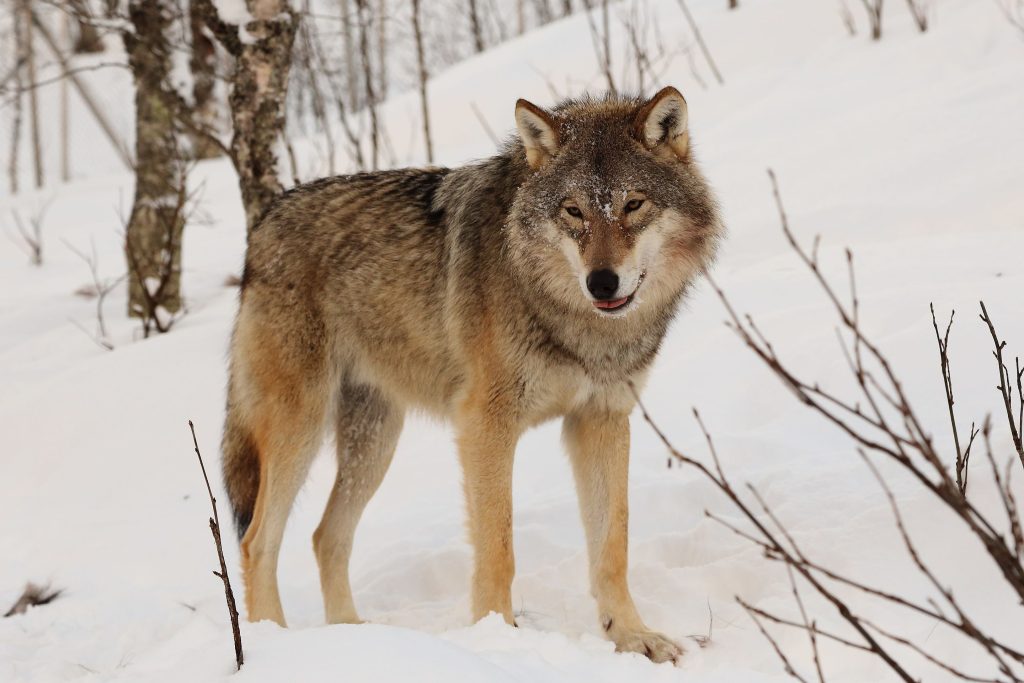
The Eurasian wolf (Canis lupus lupus), also known as the common wolf or Middle Russian forest wolf, is a subspecies of grey wolf native to Europe and the forest and steppe zones of the former Soviet Union. It was once widespread throughout Eurasia prior to the Middle Ages. Aside from an extensive paleontological record, Indo-European languages typically have several words for wolf, thus attesting to the animal's abundance and cultural significance. It was held in high regard in Baltic, Celtic, Slavic, Turkic, ancient Greek, Roman, and Thracian cultures, whilst having an ambivalent reputation in early Germanic cultures.[Credit: Wikipedia]
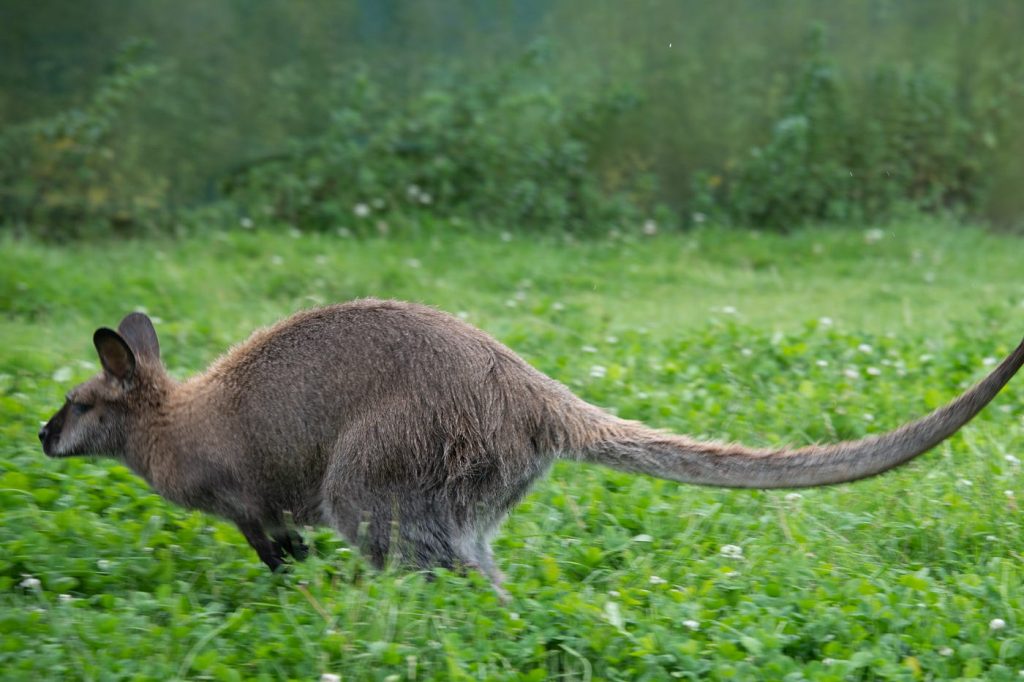
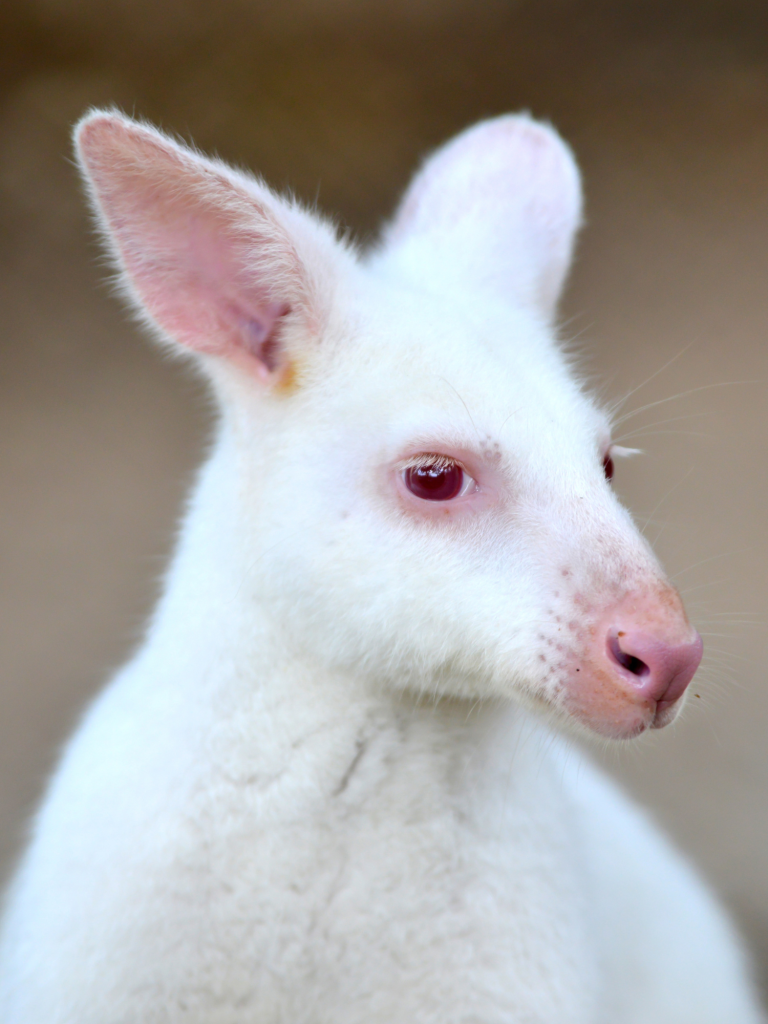
Red-Necked Wallabies are medium-sized marsupials native to the forests and coastal regions of eastern Australia. Recognizable by their reddish-brown fur, strong hind legs, and long tails, they are agile, social, and perfectly adapted to hopping through dense vegetation.
These wallabies are herbivorous, feeding mainly on grasses, leaves, and shrubs. Their powerful legs allow them to move quickly and gracefully, while their keen senses help them stay alert to predators. Often seen in small groups, they are social and watchful, yet curious about their surroundings.
At Hoo Zoo, our Red-Necked Wallaby helps visitors learn about the unique adaptations of marsupials, explore Australian wildlife, and understand the importance of conserving forests and grasslands. Observing these gentle, active animals up close gives visitors a chance to appreciate their agility, social behaviors, and vital role in their ecosystems.
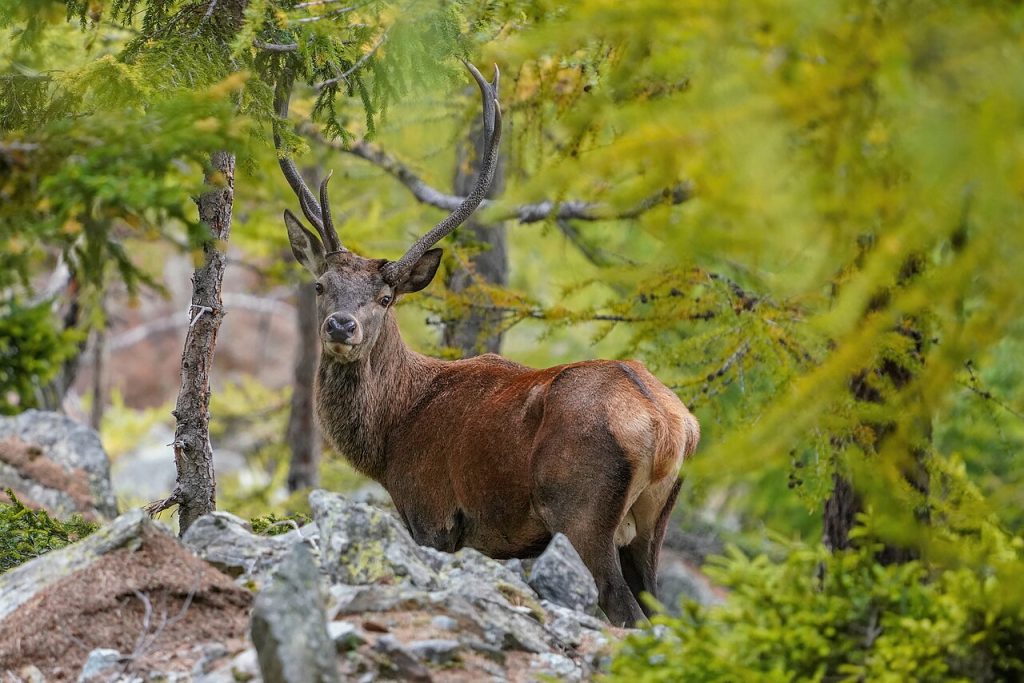
Red Deer are majestic, large mammals found across the woodlands and grasslands of Europe, Asia, and parts of North America. With their impressive antlers, rich brown coats, and graceful movements, they are a symbol of wild beauty and strength in the forest.
These herbivores feed on grasses, shrubs, and tree leaves, using their sharp senses to detect potential predators. During the autumn rut, male deer compete with powerful calls and displays to establish dominance and attract mates. Their keen instincts help them navigate both dense forests and open landscapes, where they are both revered and respected.
At Hoo Zoo, our Red Deer helps visitors explore the dynamics of forest ecosystems, the role of large herbivores in shaping landscapes, and the importance of protecting wildlife corridors. Observing these elegant, strong animals up close gives visitors a chance to appreciate their grace, resilience, and vital place in nature's balance.
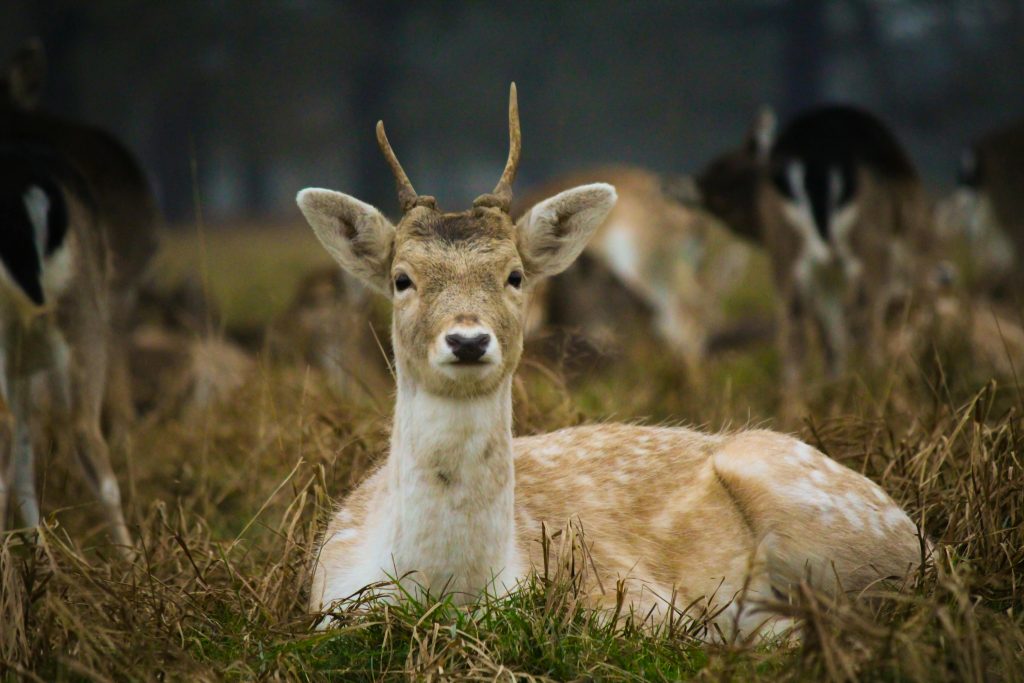
Fallow Deer are graceful, medium-sized mammals native to Europe and parts of Asia, now found in woodlands and parks around the world. With their spotted coats, sleek bodies, and elegant antlers, they are often seen as symbols of beauty and tranquility in the wild.
These herbivores graze on grasses, shrubs, and tree leaves, using their sharp senses to stay alert for predators. Fallow Deer are known for their distinctive vocalisations, often heard during the rutting season when males compete for mates. Their gentle, cautious nature makes them skilled at avoiding danger, while their keen instincts help them navigate both dense forests and open fields.
At Hoo Zoo, our Fallow Deer gives visitors a chance to learn about the delicate balance of forest ecosystems, the role of herbivores in shaping plant life, and the importance of conserving wild habitats. Observing these calm, elegant creatures up close offers a chance to appreciate their grace, alertness, and place in maintaining a healthy ecosystem.

The European badger (Meles meles) also known as the Eurasian badger, is a species of badger in the family Mustelidae and is native to almost all of Europe and some parts of West Asia. Several subspecies are recognised; the nominate subspecies (Meles meles meles) predominates over most of Europe. The European badger is classified as being of least concern by the IUCN as it has a wide range and a large population size which is stable, and even increasing in some areas.
The European badger is a powerfully built black, white, brown and grey animal with a small head, a stocky body, small black eyes and short tail. Its weight varies, being 7–13 kg (15–29 lb) in spring but building up to 15–17 kg (33–37 lb) in autumn before the winter sleep period. It is nocturnal and is a social, burrowing animal that sleeps during the day in one of several setts in its territorial range. These burrows, which may house several badger families, have extensive systems of underground passages and chambers and have multiple entrances. Some setts have been in use for decades. Badgers are very fussy over the cleanliness of their burrow, carrying in fresh bedding and removing soiled material, and they defecate in latrines strategically situated around their territory.
Though classified as a carnivore, the European badger feeds on a wide variety of plant and animal foods. The diet consists mainly of earthworms, large insects, small mammals, carrion, cereals and root tubers. Litters of up to five cubs are produced in spring. The young are weaned a few months later but usually remain within the family group. The European badger has been known to share its burrow with other species such as rabbits, red foxes and raccoon dogs, but it can be ferocious when provoked, a trait which has been exploited in the now illegal blood sport of badger-baiting. The spread of bovine tuberculosis has been attributed to badgers, however, studies in 2016 conclude that the issue is more to do with cattle and farm management.
[Credits: Wikipedia]
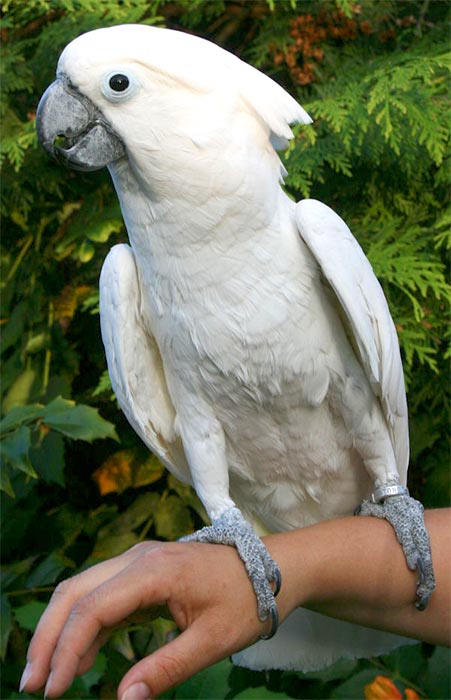
The white cockatoo, also known as the umbrella cockatoo, is a medium-sized all-white cockatoo endemic to tropical rainforest on islands of Indonesia. When surprised, it extends a large and striking head crest, which has a semicircular shape (similar to an umbrella, hence the alternative name).
The undersides of the wings and tail have a pale yellow or lemon colour which flashes when they fly. It is similar to other species of white cockatoo such as yellow-crested cockatoo, sulphur-crested cockatoo, and salmon-crested cockatoo, all of which have yellow, orange or pink crest feathers instead of white. [credits: Wikipedia]
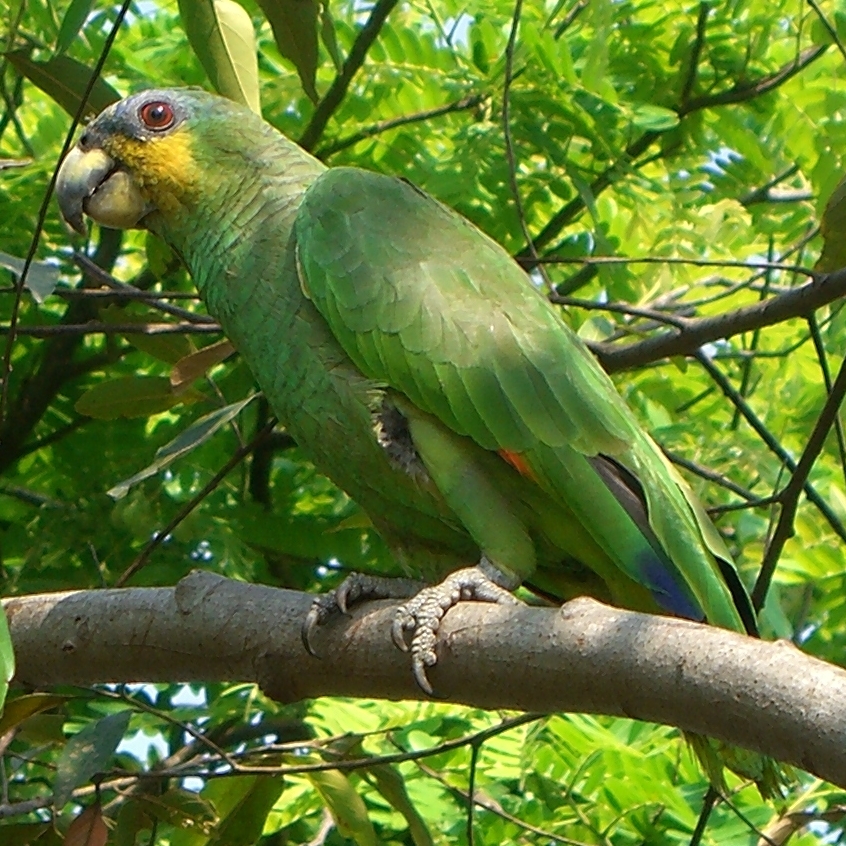
Amazon parrot is the common name for a parrot of the genus Amazona. These are medium-sized parrots native to the New World ranging from South America to Mexico and the Caribbean. Most amazon parrots are predominantly green, with accenting colors that depend on the species and can be quite vivid. They feed primarily on seeds, nuts, and fruits, supplemented by leafy matter. Many amazon parrots have a remarkable ability to mimic human speech and other sounds. Partly because of this, they are popular as pets or companion parrots, and a small industry has developed in breeding parrots in captivity for this market. This popularity has led to many parrots being taken from the wild to the extent that some species have become threatened. The Convention on International Trade in Endangered Species of Wild Fauna and Flora treaty has made the capture of wild parrots for the pet trade illegal in an attempt to help protect wild populations. [Credit: Wikipedia]
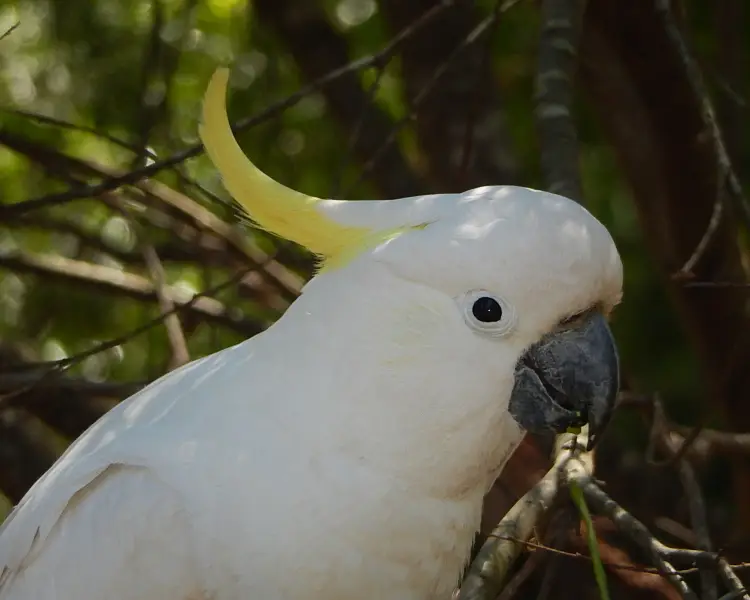
Sulphur-Crested Cockatoos are large, striking parrots native to Australia and New Guinea. Recognizable by their snowy white feathers, bright yellow crest, and expressive eyes, they are intelligent, social, and full of personality.
These cockatoos feed mainly on seeds, nuts, fruits, and blossoms, using their strong beaks to explore and manipulate their food. Highly social and curious, they often gather in large flocks, engage in playful antics, and communicate with loud, distinctive calls.
At Hoo Zoo, our Sulphur-Crested Cockatoo helps visitors explore the intelligence and social behaviors of parrots, learn about Australian ecosystems, and understand the importance of conserving forests and woodlands. Observing these magnificent birds up close gives visitors a chance to appreciate their charm, curiosity, and vital role in their ecosystems.
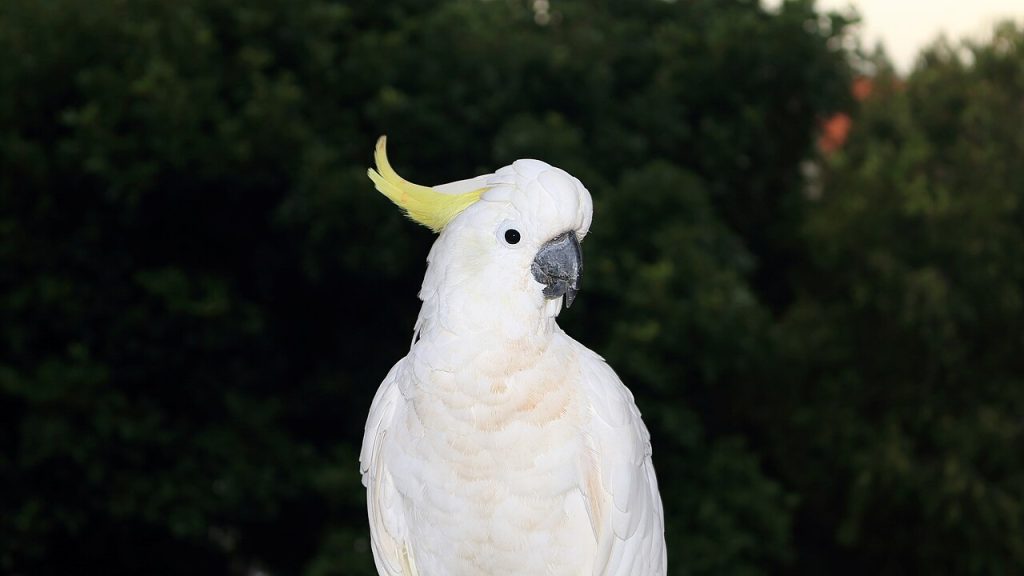
White Cockatoos are large, striking parrots native to the forests of Indonesia and surrounding islands. Recognizable by their pure white feathers, bright yellow crest, and expressive eyes, they are intelligent, social, and full of personality.
These cockatoos feed mainly on seeds, nuts, fruits, and blossoms, using their strong beaks to explore and manipulate their food. Highly social and curious, they often form close bonds with their flock and are known for their playful antics and loud, distinctive calls.
At Hoo Zoo, our White Cockatoo helps visitors learn about the behaviors and intelligence of social birds, explore tropical forest ecosystems, and understand the importance of conserving their natural habitats. Observing these magnificent birds up close gives visitors a chance to appreciate their charm, curiosity, and vital role in their ecosystems.
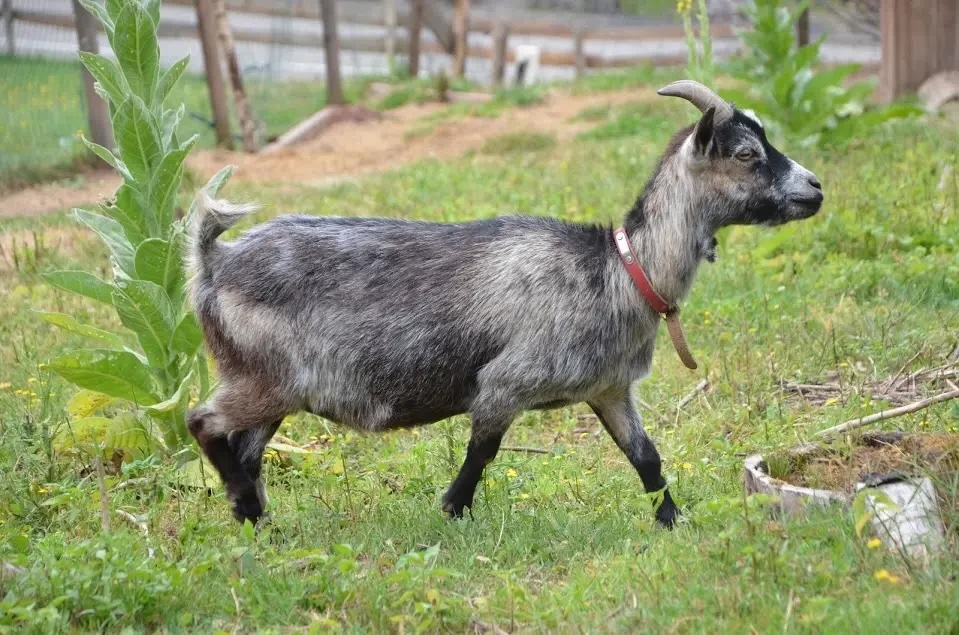
The goat or domestic goat (Capra hircus ) is a domesticated species of goat-antelope typically kept as livestock. It was domesticated from the wild goat (C. aegagrus ) of Southwest Asia and Eastern Europe. The goat is a member of the animal family Bovidae and the tribe Caprini, meaning it is closely related to the sheep. There are over 300 distinct breeds of goat. It is one of the oldest domesticated species of animal, according to archaeological evidence that its earliest domestication occurred in Iran at 10,000 calibrated calendar years ago.
Goats have been used for milk, meat, fur, and skins across much of the world. Milk from goats is often turned into goat cheese.
Female goats are referred to as does or nannies, intact males are called bucks or billies, and juvenile goats of both sexes are called kids. Castrated males are called wethers. While the words hircine and caprine both refer to anything having a goat-like quality, hircine is used most often to emphasize the distinct smell of domestic goats.
In 2011, there were more than 924 million goats living in the world, according to the UN Food and Agriculture Organization.
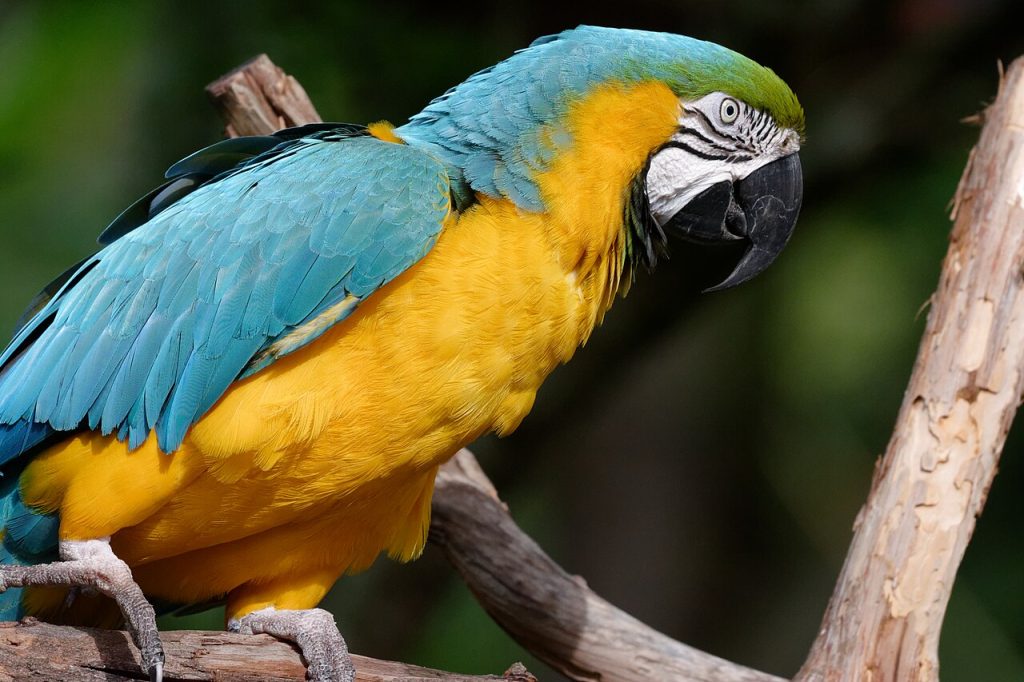
Senegal Parrots are small, vibrant parrots native to West Africa. Recognizable by their bright green bodies, yellow chests, and grey heads, they are lively, playful, and full of personality.
These parrots feed mainly on fruits, seeds, and nuts, using their strong, curved beaks to handle a variety of foods. Highly social and intelligent, they enjoy interacting with each other and exploring their environment, making them fascinating to observe.
At Hoo Zoo, our Senegal Parrot helps visitors learn about the behaviors of social birds, the diversity of African parrots, and the importance of conserving forests and savannah habitats. Watching these energetic, colorful birds up close showcases their charm, curiosity, and vital role in their ecosystems.
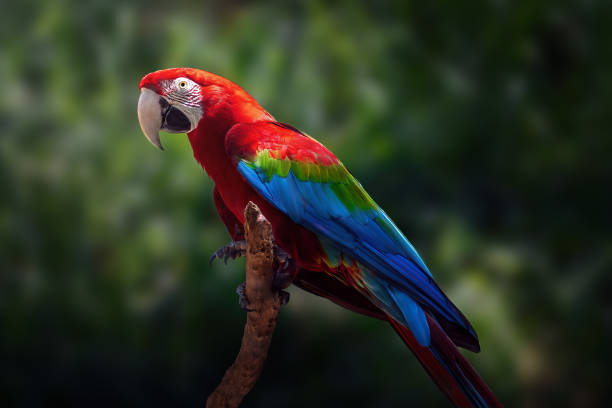
Green-Winged Macaws are large, stunning parrots native to the forests and woodlands of South America. Recognizable by their bright red feathers, green wing patches, and strong, curved beaks, they are bold, intelligent, and full of personality.
These macaws feed mainly on fruits, nuts, and seeds, using their powerful beaks to crack open hard shells. Highly social and playful, they form strong bonds with their flock and are known for their loud calls, acrobatic flights, and curious behavior.
At Hoo Zoo, our Green-Winged Macaw helps visitors discover the intelligence and social lives of parrots, learn about the richness of tropical forests, and understand the importance of conserving these habitats. Observing this magnificent bird up close highlights its beauty, curiosity, and vital role in rainforest ecosystems.
Find out more about some of the attractions and activities in this land.

Join our mailing list ot be the first to know about upcoming events!
To guarantee entry on the day, it’s essential that tickets are pre-booked. This can be done online through our ticketing system.

 Book Your Tickets


