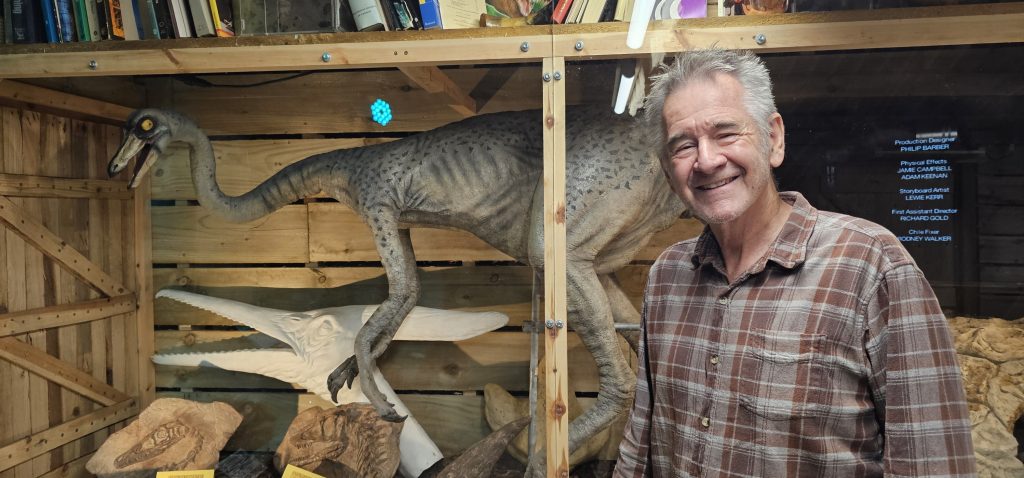
Prehistoric Park HQ is the heart of the prehistoric experience and a must-visit stop for dinosaur fans of all ages. This immersive indoor space brings television, science, and discovery together, giving visitors the chance to get up close to genuine fossils and authentic props from the hit TV series Prehistoric Park.

Find out more about the exhibits in this land!
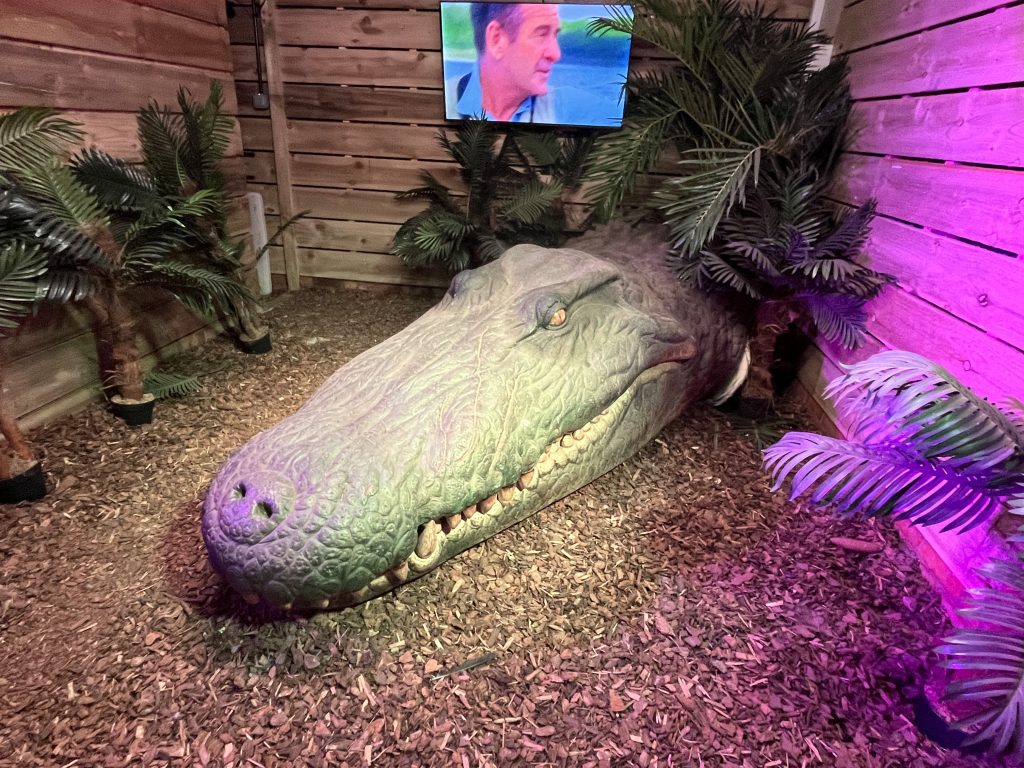

Deinosuchus was a giant prehistoric crocodile that lived around 80 million years ago, growing up to 12 meters in length. As one of the largest predators of its time, it dominated rivers and coastal environments, capable of taking on large prey, including dinosaurs.
This Deinosuchus artifact, featured in the TV series Prehistoric Park and kindly loaned to us by the show’s creator Tim Haines, is displayed here in Prehistoric Park HQ at Hoo Zoo and Dinosaur World. The specimen offers a rare opportunity to see the massive skull and powerful jaws of this ancient apex predator up close.
By observing this authentic artifact, visitors can explore the evolution of crocodilians, understand how Deinosuchus ruled its ecosystem, and experience a real connection to one of the most formidable prehistoric reptiles ever to exist.
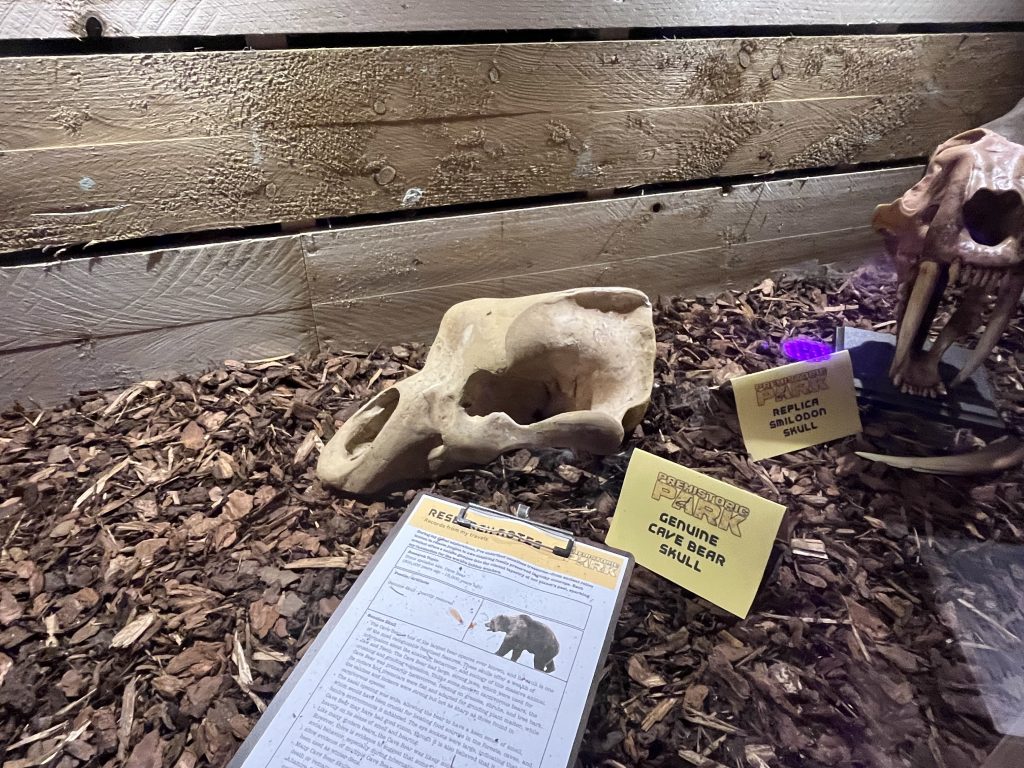
The Cave Bear was one of the largest bears to ever live, inhabiting Europe during the Ice Age before becoming extinct around 24,000 years ago. Much larger than modern bears, it had a broad, powerful skull and a heavily built body adapted for survival in cold prehistoric environments.
This genuine Cave Bear skull, displayed here in Prehistoric Park HQ at Hoo Zoo and Dinosaur World, reveals how strong and well-adapted these animals were. The large teeth and wide jaws suggest a diet that was mostly plant-based, although its size would have made it an intimidating presence to other Ice Age animals and early humans.
Cave Bears often sheltered and hibernated in caves, which led to many of their remains being naturally preserved. Seeing a real skull up close allows visitors to connect directly with an Ice Age giant and learn how studying authentic fossils helps scientists understand prehistoric life, climate change, and extinction.
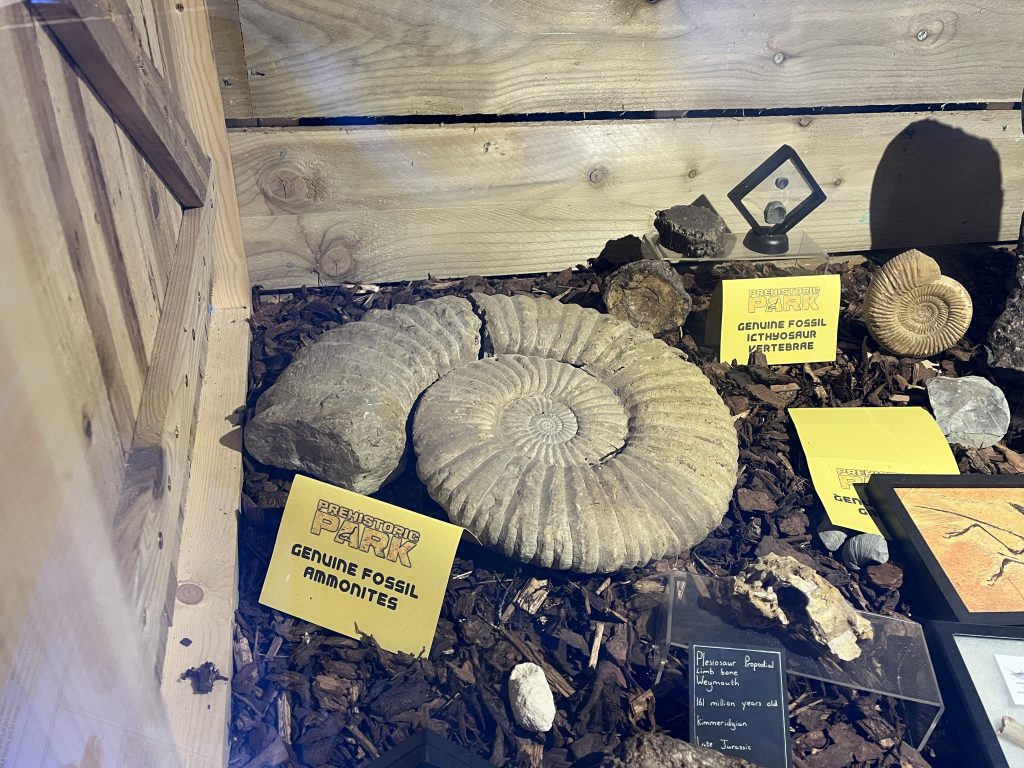
Ammonites were marine molluscs that lived in the oceans for over 300 million years, from the Devonian to the Cretaceous periods. With their coiled shells and chambered interiors, they were related to modern squids and octopuses and played a vital role in prehistoric marine ecosystems.
These genuine fossilised ammonites, displayed here in Prehistoric Park HQ at Hoo Zoo and Dinosaur World, preserve the intricate spirals and patterns of their shells, offering a window into life in ancient seas. Their fossils help scientists understand how these creatures lived, moved, and evolved over millions of years.
By observing these real ammonite fossils, visitors can connect with an ancient ocean world, explore the diversity of prehistoric life, and appreciate the remarkable preservation that allows us to study creatures that vanished long before humans existed.
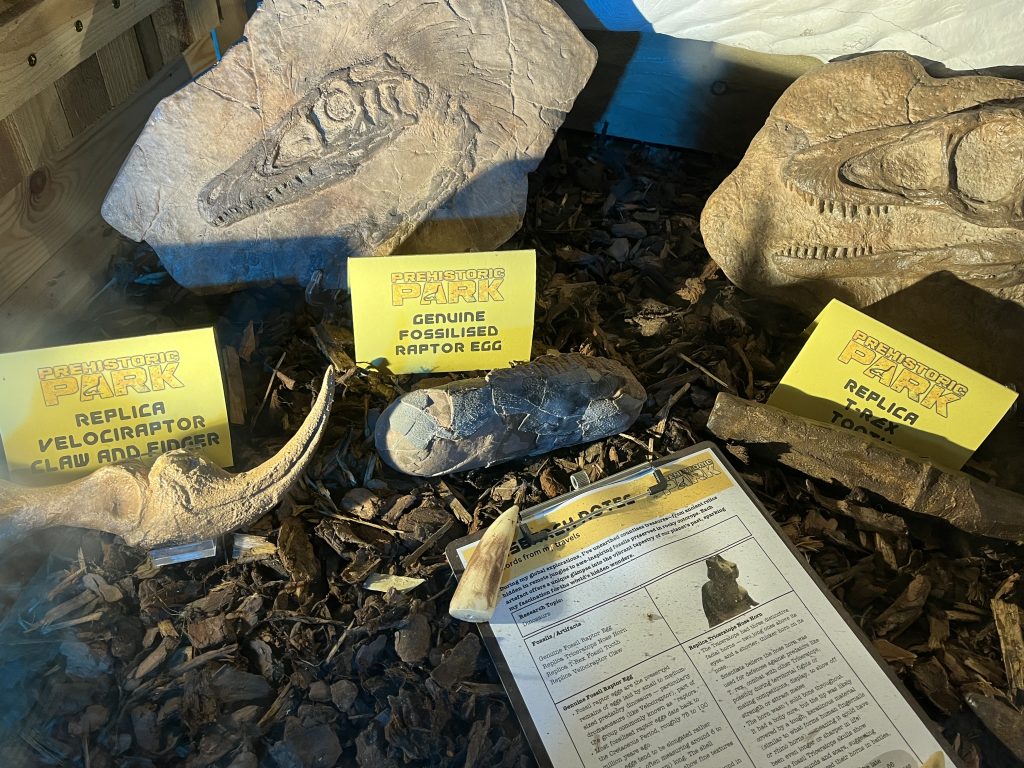
Raptors were small to medium-sized predatory dinosaurs that lived during the Late Cretaceous period, hunting in packs and using their sharp claws and keen intelligence to catch prey.
This genuine fossilised raptor egg, displayed here in Prehistoric Park HQ at Hoo Zoo and Dinosaur World, offers a rare glimpse into the reproductive life of these fascinating dinosaurs. The fossil preserves the shape and structure of the egg, revealing how raptors laid and protected their young millions of years ago.
Observing a real raptor egg up close allows visitors to connect with the beginnings of dinosaur life and understand how paleontologists study fossilised eggs to uncover behaviour, growth, and development in prehistoric species.
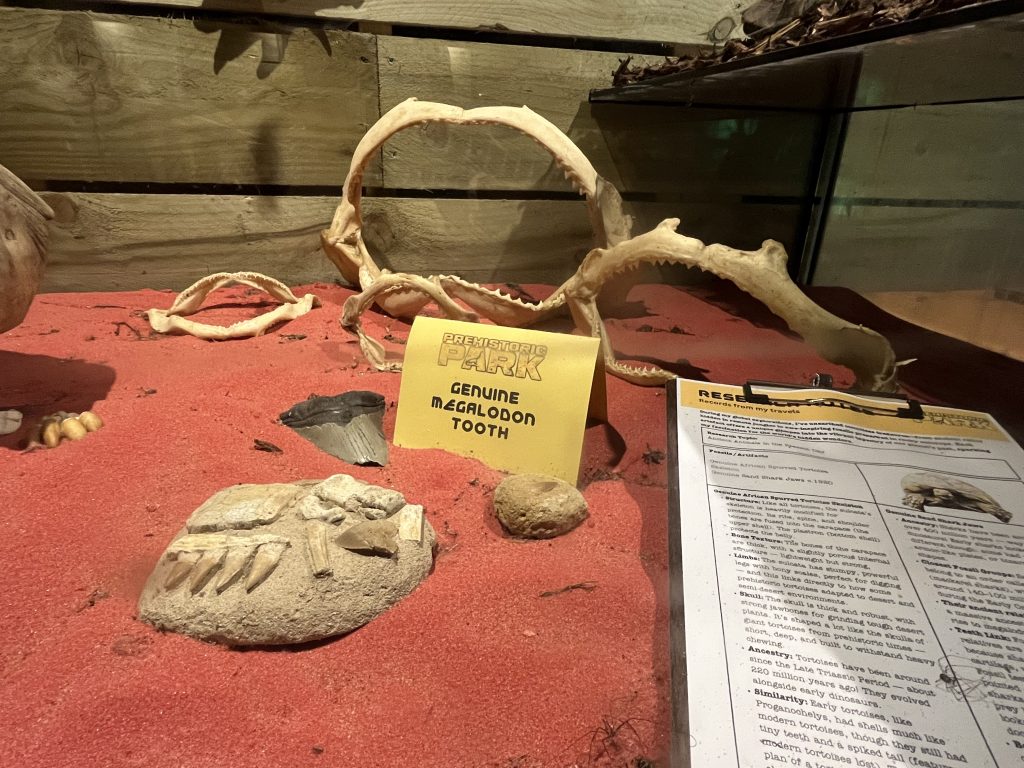
The Megalodon was the largest shark to ever live, roaming the oceans around 23 to 3.6 million years ago. Growing up to 18 meters long, it was an apex predator, using its enormous jaws and serrated teeth to hunt whales and other large marine animals.
This genuine Megalodon tooth, displayed here in Prehistoric Park HQ at Hoo Zoo and Dinosaur World, offers a rare glimpse into the power of this prehistoric predator. The tooth’s size and serrated edges reveal how effectively Megalodon could bite and tear through its prey.
By examining this real fossil, visitors can explore the evolution of sharks, understand the adaptations that made Megalodon one of the most fearsome hunters in history, and connect with a creature that dominated the ancient oceans long before humans existed.
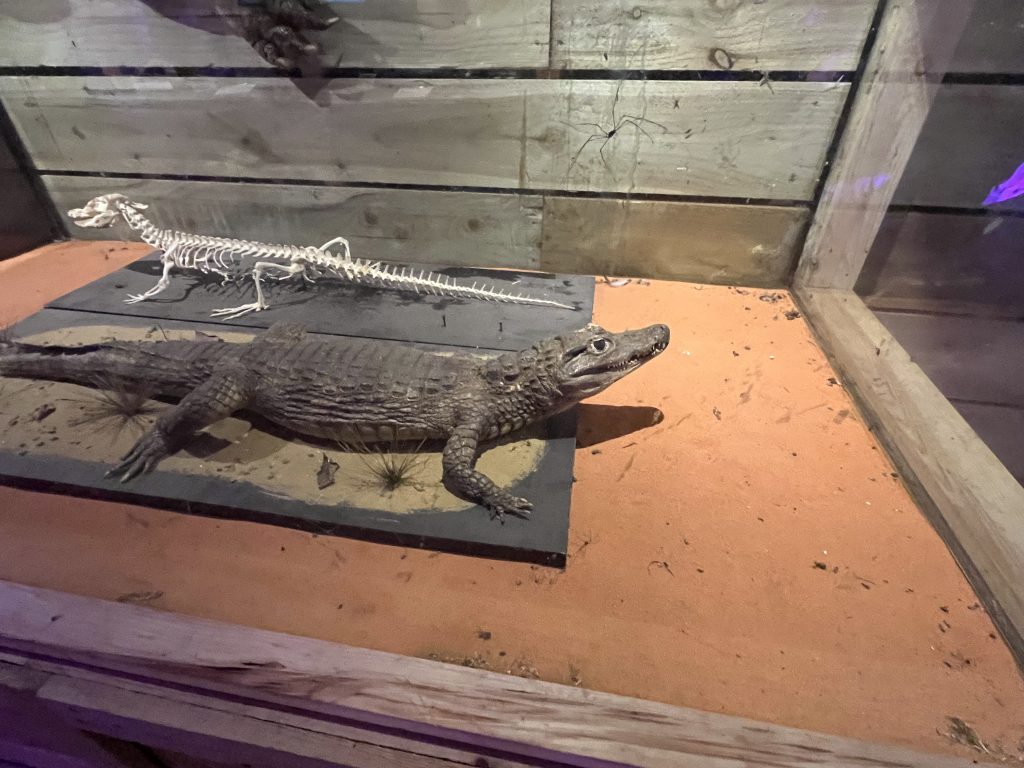
The Spectacled Caiman is a medium-sized crocodilian native to Central and South America. Named for the bony ridge between its eyes that resembles spectacles, it is a skilled predator of fish, amphibians, and small mammals, using stealth and powerful jaws to catch its prey.
This genuine Spectacled Caiman taxidermy, displayed here in Prehistoric Park HQ at Hoo Zoo and Dinosaur World, allows visitors to observe the detailed features of this remarkable reptile up close. From its armored skin to its sharp teeth, every part of the specimen demonstrates the adaptations that make caimans such successful survivors.
By studying this historic taxidermy, visitors can explore the evolution of modern crocodilians, understand how these ancient reptiles have thrived for millions of years, and connect with a living lineage that links today’s species to their prehistoric ancestors.
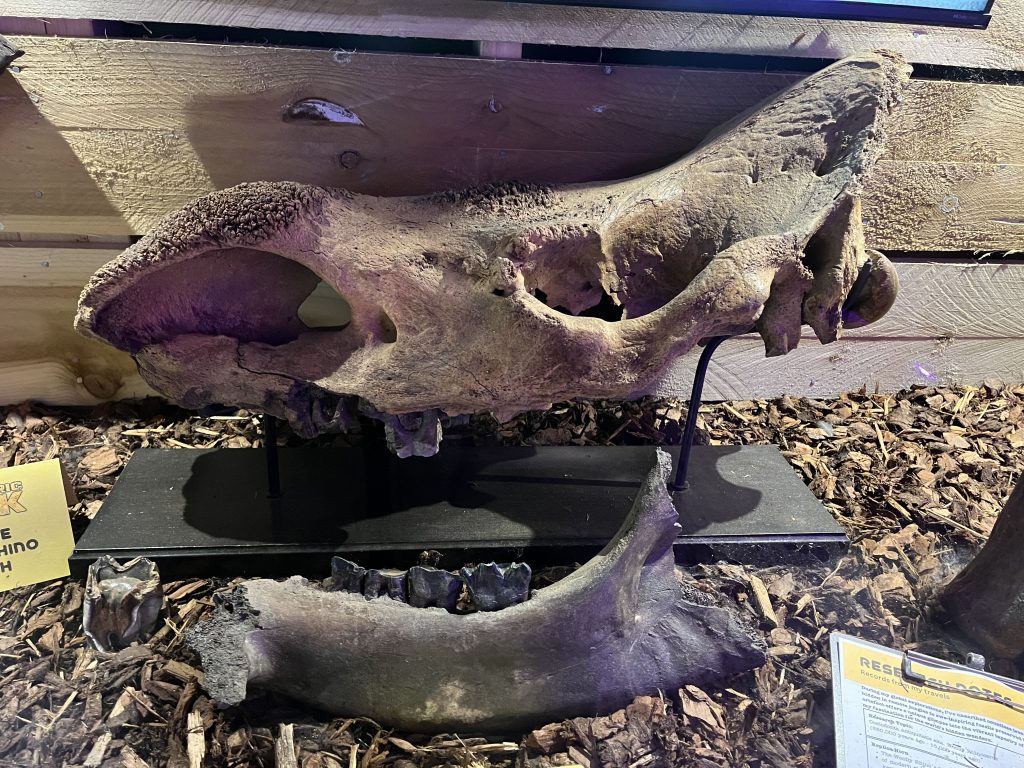
The Woolly Rhinoceros was a massive Ice Age mammal that roamed northern Europe and Asia during the last Ice Age, becoming extinct around 10,000 years ago. Adapted to cold, harsh environments, it was covered in thick fur and had a powerful build, short legs, and two large horns made of keratin.
This genuine Woolly Rhinoceros skull, found in Prehistoric Park HQ at Hoo Zoo and Dinosaur World, offers a rare and exciting glimpse into the Ice Age. Woolly Rhinos fed mainly on grasses and low-growing plants, using their large front horn to clear snow and reach food beneath. Their skull structure shows how strongly built they were, perfectly suited for life in frozen landscapes.
Seeing a real skull up close allows visitors to connect directly with an animal that lived alongside early humans. This remarkable artefact helps us understand Ice Age ecosystems, how animals adapted to extreme climates, and why studying genuine prehistoric remains is vital to uncovering Earth’s ancient past.
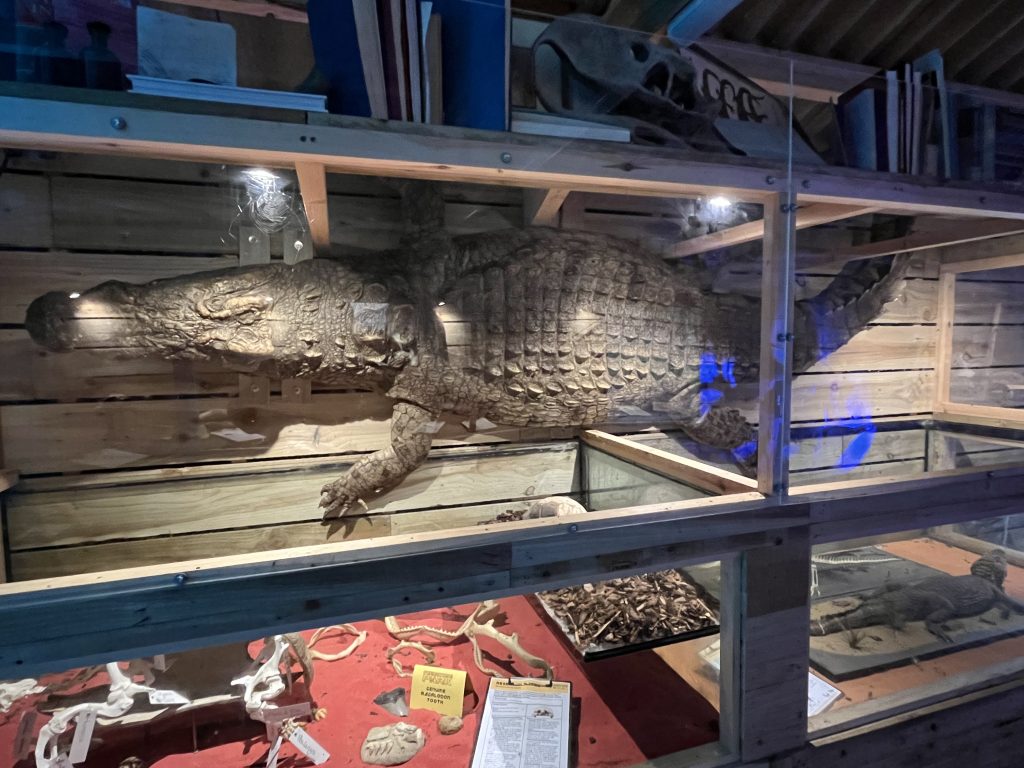
The Nile Crocodile is one of the largest and most powerful predators in Africa, capable of reaching lengths of over 5 meters. Known for its strong jaws, armoured skin, and stealthy hunting abilities, it has remained virtually unchanged for millions of years, making it a living link to prehistoric reptiles.
This Nile Crocodile taxidermy from the 1800s, displayed here in Prehistoric Park HQ at Hoo Zoo and Dinosaur World, allows visitors to appreciate the incredible size, strength, and adaptations of this apex predator. From its tough, scaly hide to its formidable teeth, every detail shows why crocodiles have survived for millions of years.
By observing this historic specimen up close, visitors can explore the evolution of reptiles, understand the adaptations that make crocodiles such successful hunters, and gain insight into the ancient lineage that connects modern reptiles to their prehistoric ancestors.
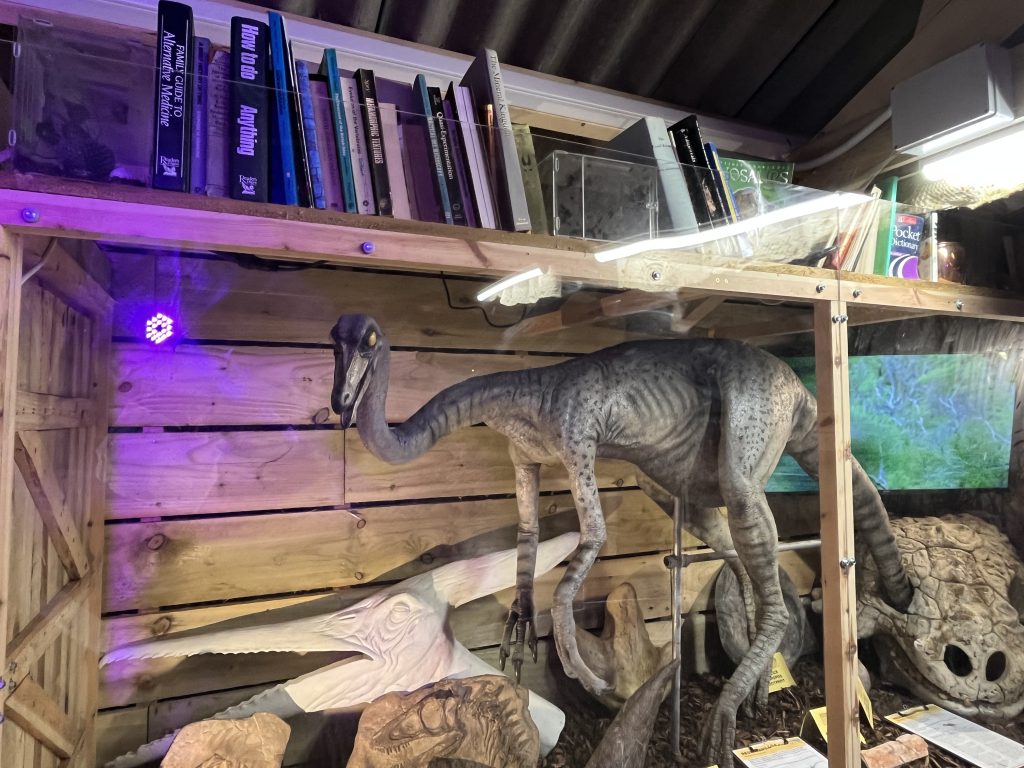
Ornithomimus was a fast, lightly built dinosaur from the Late Cretaceous period, often called the “ostrich dinosaur” because of its long legs, small head, and bird-like body. Unlike many dinosaurs, it relied on speed and agility rather than armor to escape predators.
This replica Ornithomimus, featured on Prehistoric Park with Nigel Marven and displayed here in Prehistoric Park HQ at Hoo Zoo and Dinosaur World, shows its slender, streamlined body and long limbs, ideal for sprinting across prehistoric landscapes. Its beak and small teeth suggest an omnivorous diet of plants, insects, and small animals.
By observing this replica, visitors can explore how some dinosaurs evolved for speed, see the bird-like features linking them to modern birds, and imagine life in the dynamic ecosystems of the Late Cretaceous.
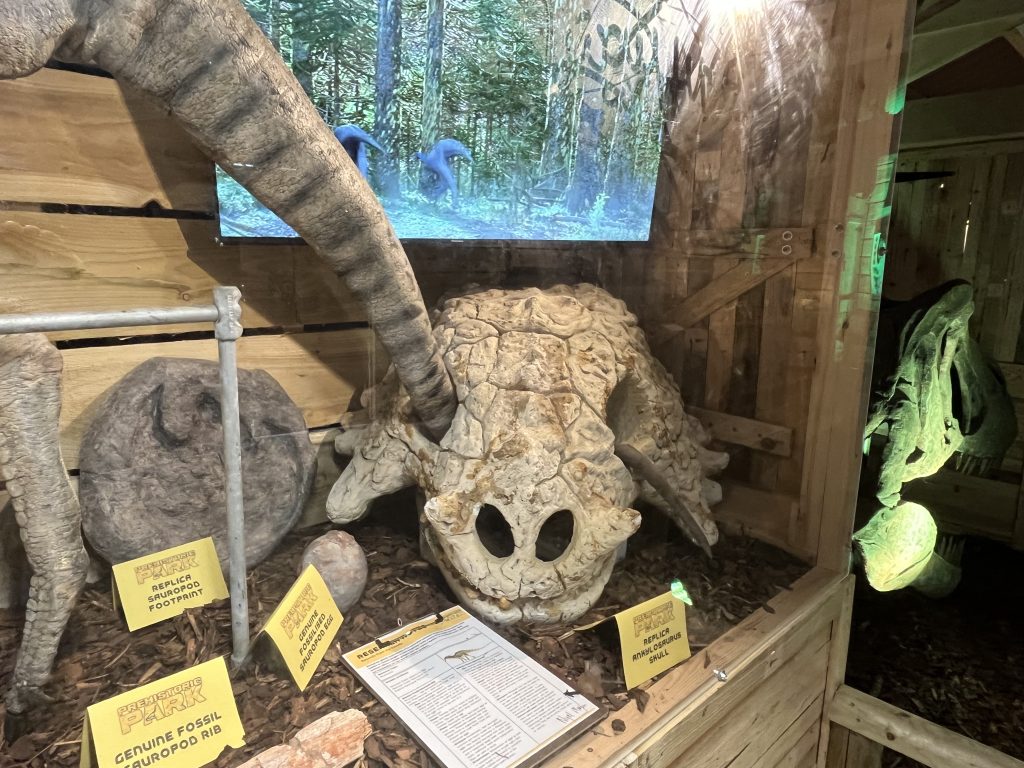
The Ankylosaurus was one of the most heavily armoured dinosaurs of the Late Cretaceous period, living around 66 million years ago. Known for its broad, armored body and massive clubbed tail, it was a slow-moving herbivore that relied on its defenses to survive among predators.
This replica Ankylosaurus skull, displayed here in Prehistoric Park HQ at Hoo Zoo and Dinosaur World, shows the wide, low shape of its head and the rows of bony plates that protected it. Its strong jaws and leaf-shaped teeth reveal how it fed on low-growing plants, while its skull structure hints at the armored body that made it nearly impervious to attacks.
By observing this detailed replica, visitors can explore how Ankylosaurus evolved unique defences, survived in a dangerous world of large predators, and became one of the most iconic armoured dinosaurs known to science.
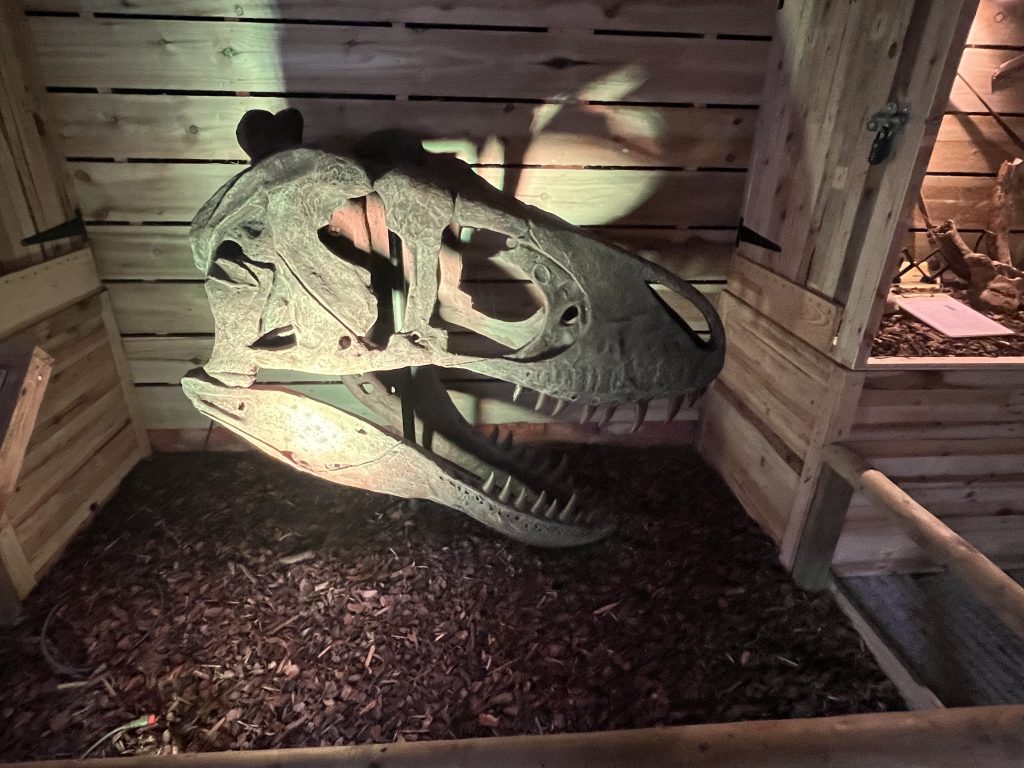
The Tyrannosaurus Rex, one of the most famous dinosaurs of all time, lived during the Late Cretaceous period around 66 million years ago. Known for its enormous size, powerful jaws, and sharp teeth, it was a top predator in its ecosystem.
This Tyrannosaurus Rex skull artifact, displayed here in Prehistoric Park HQ at Hoo Zoo and Dinosaur World, highlights the massive structure of its head, the rows of serrated teeth, and the adaptations that made it such an effective hunter. The skull provides a glimpse into the feeding behaviour, strength, and predatory lifestyle of this iconic dinosaur.
By studying this artifact, visitors can explore of one of Earth’s most fearsome predators, understand how paleontologists reconstruct dinosaur behaviour from fossils, and connect with the prehistoric world in an up-close, tangible way.
Join our mailing list ot be the first to know about upcoming events!
To guarantee entry on the day, it’s essential that tickets are pre-booked. This can be done online through our ticketing system.

 Book Your Tickets


