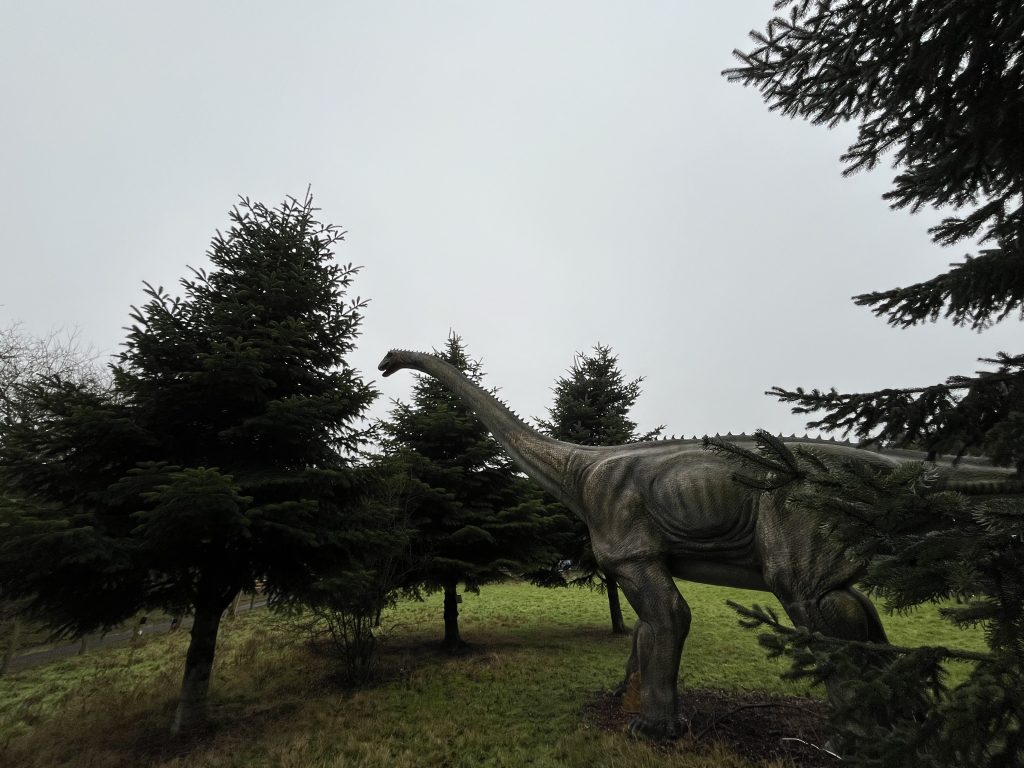
Scientific Name: Alamosaurus
Most common Location: Cretaceous
Conservation Status: Extinct
Alamosaurus was a massive, plant-eating dinosaur that lived during the Late Cretaceous period, around 70 million years ago. With its towering height, long neck, and giant body, it was one of the largest sauropods of its time, roaming the ancient landscapes of what is now North America.
As a herbivore, Alamosaurus fed on trees, ferns, and other vegetation, using its long neck to reach high into the treetops or low to the ground for plants. Its massive size likely made it a difficult target for predators, but it was also believed to travel in herds for extra protection. Its long tail may have been used for balance or even as a defensive weapon against smaller predators.
At Hoo Zoo, our Alamosaurus helps visitors discover the world of giant herbivores, the role of sauropods in shaping ancient ecosystems, and how these colossal creatures survived in a world of predators. Observing this towering giant up close gives visitors a glimpse into the prehistoric past and the incredible scale of life millions of years ago.
Join our mailing list ot be the first to know about upcoming events!
To guarantee entry on the day, it’s essential that tickets are pre-booked. This can be done online through our ticketing system.

 Book Your Tickets
 Book an Experience